
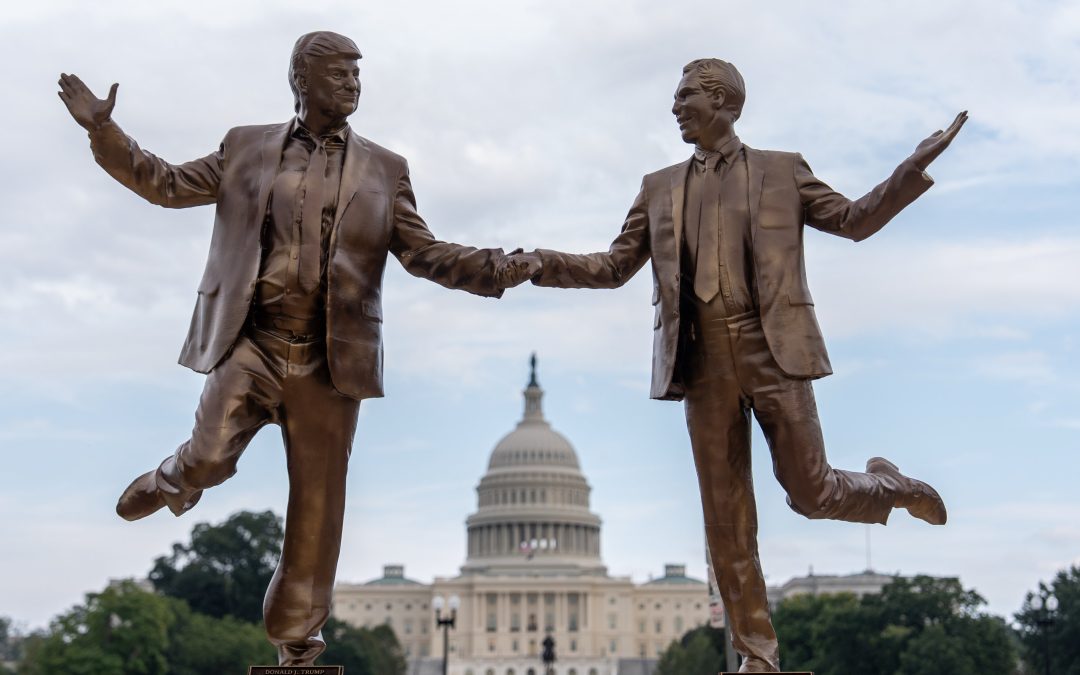
(Photo: Nikhinson/ Associated Press)
Washington D. C., USA — February 28, 2026
In an abrupt escalation that stunned the world, President Donald Trump has ordered U.S. military strikes against Iran in coordination with Israeli leadership, marking the start of what analysts are already calling a highly volatile confrontation in the Middle East. The strikes targeted military and strategic sites, including missile and command infrastructure, as Tehran vowed retaliation.
This article was later edited to include additional reporting from March 2, 2026, following an interview on the Diary of a CEO podcast with security expert Gavin de Becker, which shed new light on Epstein’s alleged intelligence ties.
Netanyahu, Trump, and Decades of Influence
For over three decades, Israeli Prime Minister Benjamin Netanyahu has exerted extraordinary influence on U.S. foreign policy. His repeated warnings about Iran’s nuclear program and alleged threats from neighboring states have repeatedly drawn the United States into conflicts across the Middle East. From Iraq to Syria, and now Iran, analysts suggest a consistent pattern: Netanyahu frames regional neighbors as existential threats, and the U.S. often acts as a willing enforcer.
With Trump now at the helm of military action, some commentators argue that the United States is effectively acting as Netanyahu’s “lapdog,” advancing Israeli strategic goals under the banner of American national security.
The Epstein-Mossad Connection (Added March 2, 2026)
Following new commentary on the Diary of a CEO podcast, allegations suggest that Jeffrey Epstein may have been a Mossad agent, with Ghislaine Maxwell’s father, Robert Maxwell, also tied to Israeli intelligence. If accurate, the Epstein network could have been a sophisticated honey trap, collecting blackmail material on U.S. politicians, business leaders, and other influential figures.
Some observers now speculate that the timing of military action may serve as a distraction, keeping global attention on Iran while complex intelligence and influence operations remain hidden.
Apocalyptic Narratives and Symbolism
Fringe narratives have also attached symbolic weight to the conflict. Some conspiracy theorists claim that Zionist actors aim to provoke attacks on the 12 tribes of Israel to trigger Judgment Day — a claim not supported by credible evidence, but potent in its ability to feed fear and moral certainty. Meanwhile, Iran’s recent symbolic acts, such as burning effigies labeled “Baal,” have been interpreted by some online commentators as provocations, though official Israeli or U.S. statements do not cite these actions as a cause for war.
Why the War Is Risky
Iran is geographically and militarily formidable. Its mountainous terrain, underground facilities, and long-term preparation make conventional military victory extremely difficult. Analysts warn that while the U.S. and Israel may temporarily degrade capabilities, Tehran’s strategic depth and asymmetric advantages could prolong the conflict indefinitely.
Yet despite these risks, Trump’s strikes continue — highlighting the intersection of geopolitics, intelligence influence, and domestic distractions. Whether one views the war as a security necessity, a geopolitical blunder, or part of a broader web of manipulation, the timing is striking.
The Bigger Picture
What appears as a sudden military crisis may actually be the culmination of decades of influence, lobbying, intelligence operations, and strategic deception. From Epstein’s alleged honey trap to Netanyahu’s decades-long influence on U.S. foreign policy, from apocalyptic narratives to symbolic effigies, the story is far more complex than the headlines suggest.
The question now is not just who will prevail on the battlefield, but who is orchestrating the narrative — and whether the world is watching a war for protection, or a war for distraction.