
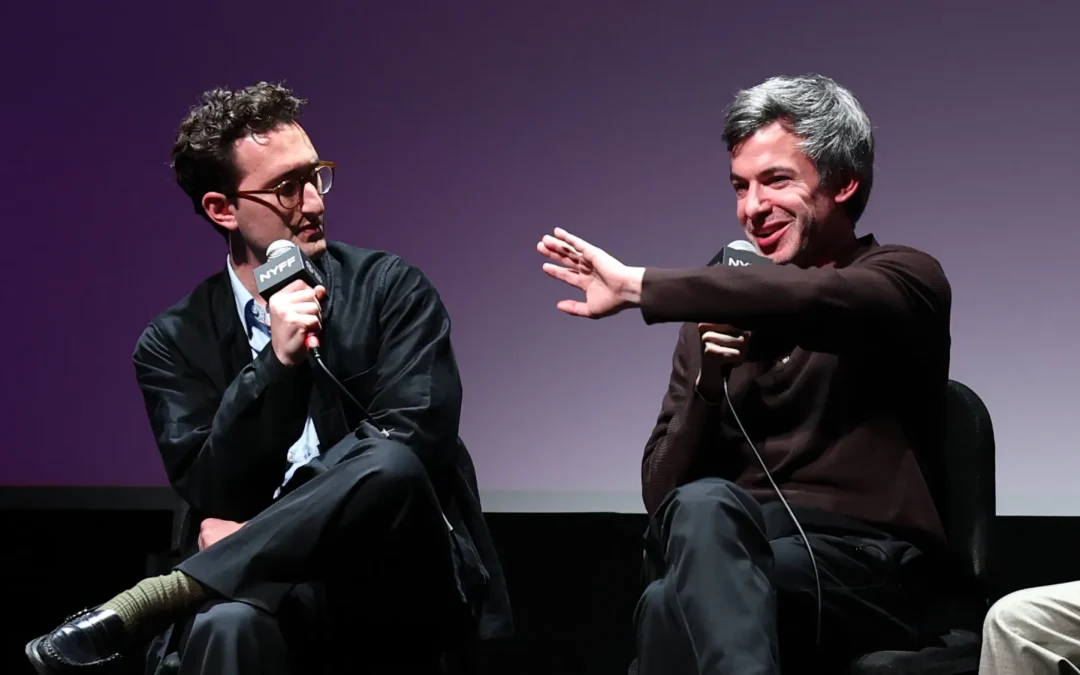
(Photo: Social Media)
New Orleans, LA — October 26, 2026 — A documentary filmmaker gains access to a room full of attorneys. Inside are videos containing some of the most intimate details of their clients’ lives: childhood trauma, personal struggles, family histories, and the circumstances surrounding criminal convictions. These films were created for a specific purpose. They were intended to help judges see the human beings behind criminal cases before deciding how long those people should spend in prison.
Now imagine that the footage leaves that room, appears in a documentary distributed by one of the most influential newspapers in the United States, and helps advance the career of the filmmaker who used it.
That is the allegation now facing Lance Oppenheim, the director behind You Can See Everything and Primetime, whose growing professional success has been overshadowed by accusations that he took sentencing-mitigation footage without authorization and sold a documentary containing it to The New York Times.
Katie Carter, a criminal defense investigator and mitigation specialist who has worked with Louisiana’s public defender system, publicly accused Oppenheim of stealing footage from public defenders and using it in his 2017 short documentary, No Jail Time: The Movie. Carter says the footage came from films that attorneys had shared during a professional training session and that Oppenheim was not authorized to use those films in his own work.
Attorney and filmmaker Doug Passon, who organized the training, has separately alleged that Oppenheim violated an explicit understanding that he would not use any of the sentencing videos without permission.
The allegations are serious. They concern not only the ownership and use of documentary footage, but also the treatment of vulnerable people whose personal histories were recorded to help them navigate the criminal justice system.
Oppenheim has not publicly responded to the allegations in the reporting available as of October 26. The New York Times has disputed the characterization of the footage as private and defended its use as fair use. No court finding establishing that Oppenheim committed copyright infringement has been identified in the reporting reviewed for this article.
Those distinctions matter. But they do not make the questions raised by Carter and Passon any less deserving of scrutiny.
Because if their accounts are accurate, the controversy is about more than a filmmaker’s decision to incorporate existing footage into a documentary.
It is about who gets to profit from vulnerable people’s stories, who has the power to decide how those stories are told, and what accountability looks like when the people raising concerns do not have the same professional influence as the person they accuse.
The Footage Was Created to Help People Facing Prison
To understand the allegations, it is necessary to understand what sentencing-mitigation films are and why the people who make them treat their work so carefully.
Defense attorneys and mitigation specialists sometimes produce short documentaries to present a more complete picture of a defendant’s life before sentencing. These films may explore childhood experiences, family relationships, histories of abuse, mental health struggles, poverty, and other circumstances that help explain a person’s background.
The objective is to give a judge information that may not be adequately conveyed through conventional legal documents or courtroom testimony.
These are not ordinary entertainment documentaries. They are tools of legal advocacy, created for a specific audience and purpose.
The people featured in them may have disclosed deeply personal experiences because they believed those experiences could help a judge understand their circumstances. Their participation can involve a considerable degree of vulnerability, particularly when the footage includes traumatic experiences or details that they would not otherwise share publicly.
A recording made for that purpose does not automatically become available for unrestricted use simply because it exists.
The precise legal rights attached to a particular recording depend on the circumstances, including ownership, permissions, agreements, and applicable law. But the ethical distinction between creating a film for a sentencing proceeding and publishing it for a general audience is substantial.
According to Carter, Oppenheim attended a training session where public defenders shared their mitigation films. She alleges that he was permitted to film the training itself, but not to appropriate the films shown during it for his own documentary.
Carter has also alleged that a password or private link provided access to a collection of films and that Oppenheim used that access to obtain material he had not been authorized to repurpose.
Passon has described a similar understanding of the restrictions surrounding the footage, saying he had agreed to Oppenheim’s attendance and filming on the condition that the sentencing videos would not be used without explicit permission.
These are competing claims that require evidence and a response from Oppenheim. But they identify the central issue: whether permission to attend and document a professional training was treated as permission to use the sensitive material entrusted to its participants.
Those are not necessarily the same thing.
From a Training Session to The New York Times
Oppenheim’s No Jail Time: The Movie was published by The New York Times in 2017 and explored the use of sentencing-mitigation films in criminal proceedings.
Carter says she discovered that footage from the training had appeared in the documentary when she encountered the finished work on the newspaper’s website.
Her account is particularly striking because she alleges that participants had been told not to use the films without permission and that Oppenheim had promised to show the group a cut of the documentary before submitting it.
According to Carter, that opportunity never materialized.
She says she subsequently attempted to contact Oppenheim through multiple channels, sought the removal of the documentary, and raised her concerns with people connected to his filmmaking education.
Passon has also described the experience as a breach of trust, alleging that he never received the promised opportunity to review the finished film before publication.
The distinction between an allegation and an established fact must be maintained. The available accounts do not independently establish every detail of the alleged agreement or the precise circumstances under which each clip was obtained.
But if the restrictions described by Carter and Passon were clearly communicated and subsequently ignored, the consequences would extend beyond a disagreement about creative choices.
The issue would be whether Oppenheim used access granted for one purpose to obtain material for another, without securing the permissions the people providing that access believed were required.
That is the question the filmmaker should be asked to answer.
Who Benefited From the Alleged Use of the Footage?
One of Carter’s central criticisms is that Oppenheim benefited professionally from the stories of people whose circumstances were already defined by a substantial imbalance of power.
Her allegation is that footage created by public defenders to advocate for their clients became material for a separate documentary that Oppenheim sold to The New York Times.
The distinction matters because documentary filmmaking is not simply an exercise in recording events. It is also a profession in which access, compelling footage, and distinctive subject matter can contribute to a filmmaker’s reputation and future opportunities.
A filmmaker who obtains material that other people have spent considerable time and resources creating may gain an advantage from work they did not produce themselves.
If that material also involves people whose lives are unusually vulnerable to public scrutiny, the ethical stakes become greater.
The public defenders and mitigation specialists who create these films are attempting to help clients navigate a system in which the consequences of a sentencing decision can last for years or, in some cases, the remainder of a person’s life.
Their work can involve building relationships with clients, obtaining permission to discuss difficult experiences, interviewing family members, and assembling a narrative intended to help a judge understand the person before the court.
Carter argues that the alleged use of the footage disregarded both the work involved in producing it and the circumstances of the people appearing in it.
The question is not whether a filmmaker can ever use footage originally created by someone else. Documentary journalism routinely relies on archival material, public records, and footage produced by third parties.
The question is whether the material was obtained and used in circumstances that respected the relevant permissions, agreements, and obligations to the people involved.
Nor should it be assumed that the existence of a published documentary proves that its creator acted improperly. The New York Times has defended the use of the clips under fair-use principles.
But the publication and subsequent professional success of a film do not, on their own, resolve questions about how its material was obtained.
Those questions deserve answers independent of the documentary’s artistic merits.
The People in the Footage Were Not Simply Characters
The most troubling dimension of this controversy is the position of the people whose stories appear in the footage.
In ordinary entertainment, a person may agree to participate in a project knowing that the finished product will be distributed to a public audience. Even then, disagreements can arise over editing, context, and how a participant is portrayed.
Sentencing-mitigation films are different because they are created within a legal process. Their purpose is to influence a judge’s understanding of a person whose liberty is at stake.
A defendant who agrees to discuss childhood trauma or family circumstances for a sentencing film may reasonably distinguish between that use and publication in a documentary available to a general audience.
Whether that expectation creates a legally enforceable restriction in a particular case depends on the evidence and the applicable law. It should not simply be assumed.
But the ethical question is unavoidable: how should filmmakers handle intimate material created by people who agreed to participate under circumstances different from those in which the footage is ultimately published?
Carter has said that at least one person whose footage was used was subsequently executed. Another of her clients featured in the documentary remains incarcerated, according to her account.
Those details underscore the gravity of the underlying subject matter. They do not independently prove the alleged misconduct, but they make clear that the footage concerns real people whose experiences cannot be reduced to compelling images for a film.
The defendants were not merely characters in a filmmaker’s story. They were people navigating criminal proceedings with potentially life-altering consequences.
Their circumstances deserve consideration even when the legal questions surrounding the footage remain unresolved.
The New York Times Says the Use Was Fair Use
The newspaper’s position must be considered alongside the allegations.
A spokesperson for The New York Times has disputed the characterization of the footage as private and defended its use as fair use.
Under U.S. copyright law, fair use can permit certain uses of copyrighted material without the copyright holder’s permission. Courts consider several factors, including the purpose of the use, the nature of the original work, the amount used, and the effect on the market for the original.
The doctrine is not a blanket exemption for documentary filmmakers. Whether a particular use qualifies depends on the circumstances.
It is also important to distinguish copyright from other issues raised by the allegations.
The question of whether footage was subject to a particular agreement is not necessarily identical to the question of whether its publication qualifies as fair use. Nor does a dispute over the footage’s privacy status automatically resolve whether restrictions were communicated or whether participants’ expectations were respected.
A legal defense and an ethical defense are related, but they are not interchangeable.
A publisher may believe that the use of material is legally permissible while the people who supplied that material argue that the circumstances of its acquisition or publication were inappropriate.
Conversely, a person who believes their footage was used improperly has not automatically established that a law was violated.
The evidence matters, and the competing accounts should be examined carefully.
The newspaper’s defense is relevant, but it does not answer every question raised by Carter and Passon about the alleged restrictions on access or the filmmaker’s communications with the people who organized the training.
Those issues require a more complete account of what happened.
Years of Alleged Silence
Carter’s recent public accusations are not presented as a dispute that began this month.
She says she attempted to address the matter years ago, contacting Oppenheim and others connected to the project in an effort to have the documentary removed and the footage returned.
Her frustration is not limited to the alleged use of the videos. She has also questioned why the matter did not appear to produce meaningful accountability while Oppenheim continued to develop his career.
That concern has become more visible as his profile has grown.
Oppenheim directed Primetime, in which Robert Pattinson portrays former To Catch a Predator host Chris Hansen, and co-directed You Can See Everything with Nathan Fielder, a documentary concerning Elizabeth Holmes and the period surrounding her imprisonment.
The renewed allegations have emerged during a period of significant professional attention for the filmmaker.
It would be wrong to suggest that the success of his recent projects proves the allegations are true. Career advancement is not evidence of misconduct, and the accusations must be assessed on their own merits.
But the timing does raise a legitimate question about how complaints concerning a filmmaker’s earlier work are handled when that filmmaker becomes increasingly prominent.
If a person raises concerns about a powerful professional and does not receive a satisfactory response, what mechanisms are available to investigate the complaint? What responsibility belongs to publishers who distribute the disputed work? And what should happen when a controversy resurfaces years after the original publication?
These questions are relevant far beyond Oppenheim.
Creative industries often rely on informal networks of trust, professional recommendations, and access to influential institutions. Those structures can create opportunities for talented people, but they can also make accountability difficult when a dispute involves someone whose career is gaining momentum.
The answer is not to presume that every accusation is true. It is to ensure that serious allegations receive a meaningful response rather than being dismissed because the person accused has become successful.
Documentary Ethics Cannot End With Copyright Law
The documentary industry has long wrestled with the tension between a filmmaker’s independence and the responsibilities that come with documenting other people’s lives.
Filmmakers need editorial freedom. They must be able to make difficult decisions, challenge their subjects, and create works that do not simply reproduce the perspectives of the people being filmed.
Requiring every subject to approve every edit would fundamentally change documentary journalism and could prevent legitimate reporting.
But editorial independence does not mean that the circumstances under which access was obtained are irrelevant.
A filmmaker who attends a professional event, gains access to material, and later uses that material in a separate project may face questions about the scope of the original permission. Those questions become especially important when the footage contains sensitive information about people who were not necessarily participating in the event for the benefit of a public audience.
The alleged use of sentencing-mitigation footage illustrates why consent and transparency cannot be treated as minor administrative concerns.
The issue is not whether documentary filmmakers must obtain permission for every image they publish. Copyright law, journalism ethics, public-interest considerations, and contractual arrangements all involve different standards.
The issue is whether a filmmaker should be expected to respect clearly communicated restrictions on material and be honest about the intended use of the access they receive.
If those restrictions were agreed upon, they should not become irrelevant simply because a filmmaker subsequently sees an opportunity to create a compelling work.
And when a filmmaker disputes the account of the people who provided access, the appropriate response is to explain the circumstances and provide evidence where possible.
That is how professional trust is maintained.
What Oppenheim Needs to Answer
The allegations raise several questions that should be addressed directly.
What was Oppenheim told before attending the training session? Was he expressly prohibited from using the sentencing films without permission? Did he access a password-protected collection of videos, and, if so, what authorization did he have to download them?
Did he promise to show the organizers or participants a cut of the finished documentary before submitting it to The New York Times? What communications took place after Carter and Passon raised their objections?
What steps, if any, did he take to address their concerns? And what is his response to the allegation that the documentary used material obtained under restrictions he had agreed to respect?
These questions should be put to Oppenheim and his representatives, with a meaningful opportunity to respond.
The newspaper should also be asked to explain the basis for its fair-use position and whether it was aware of the alleged restrictions when it published the documentary.
Any written agreements, correspondence, and records relevant to the dispute should be examined where they can be obtained lawfully.
Until those questions are answered, it would be premature to declare that every allegation has been proven. But it would be equally inappropriate to treat the controversy as settled simply because the documentary was published and the filmmaker continued working.
The public deserves a clearer account of what happened.
A Filmmaker’s Success Does Not Resolve Questions of Accountability
There is a familiar tendency in the entertainment industry to treat professional achievement as a kind of defense against criticism.
A filmmaker makes an acclaimed project. A director attracts influential collaborators. A new film receives attention from major publications and distributors. The person’s career becomes a story of talent, ambition, and creative vision.
But success does not answer questions about how earlier projects were made.
If the allegations against Oppenheim are inaccurate, a clear response supported by evidence would help establish that. If important restrictions were ignored, those circumstances deserve acknowledgment and examination.
Neither outcome should be determined by how exciting his latest film is or how much attention his career has received.
The people who create documentary footage are entitled to have legitimate questions about its use taken seriously. The people appearing in that footage deserve consideration of the circumstances under which their stories were recorded. And publishers should be prepared to explain the decisions involved in distributing material that has become the subject of a credible public dispute.
None of this requires assuming that Oppenheim is guilty of a crime. It requires recognizing that the allegations are serious enough to warrant answers.
The People Behind the Story Deserve More Than Silence
At its best, documentary filmmaking helps audiences understand people whose lives are otherwise reduced to headlines, statistics, or public stereotypes.
Sentencing-mitigation films serve a particularly important purpose. They attempt to show judges that a defendant is more than the offense for which they have been convicted and that a person’s history may matter when deciding their punishment.
The irony at the center of this controversy is difficult to ignore.
The allegations concern a filmmaker who made a documentary about a practice designed to give vulnerable defendants a fuller hearing. Carter and Passon say the footage was then used in circumstances they had not authorized, turning the stories of people facing criminal punishment into material for another filmmaker’s work.
That account remains disputed, and the legal questions require careful examination.
But the larger issue is not difficult to understand. People who share intimate details of their lives for a particular purpose should not have to wonder whether those details will later be used in ways they were never told to expect.
Access is a privilege. Trust creates responsibilities. And professional success should never make legitimate questions about those responsibilities disappear.
Lance Oppenheim’s recent work may continue to attract audiences and critical attention. His career should be judged on its artistic merits, just as the allegations concerning No Jail Time: The Movie should be judged on the available evidence.
Those are separate questions.
The appropriate response is neither to condemn a filmmaker without proof nor to dismiss the concerns of people who say their trust was violated.
It is to investigate what happened, demand clear answers, and recognize that the people whose lives appear on screen are not simply material to be used in pursuit of a compelling story.
They are human beings with their own histories, vulnerabilities, and interests.
If the documentary industry wants audiences to trust its commitment to telling difficult stories, it must be willing to examine how those stories are obtained, who benefits from their publication, and what happens when the people behind them say something went wrong.
The camera does not absolve its operator of responsibility.
And a successful career should never be a substitute for accountability.