
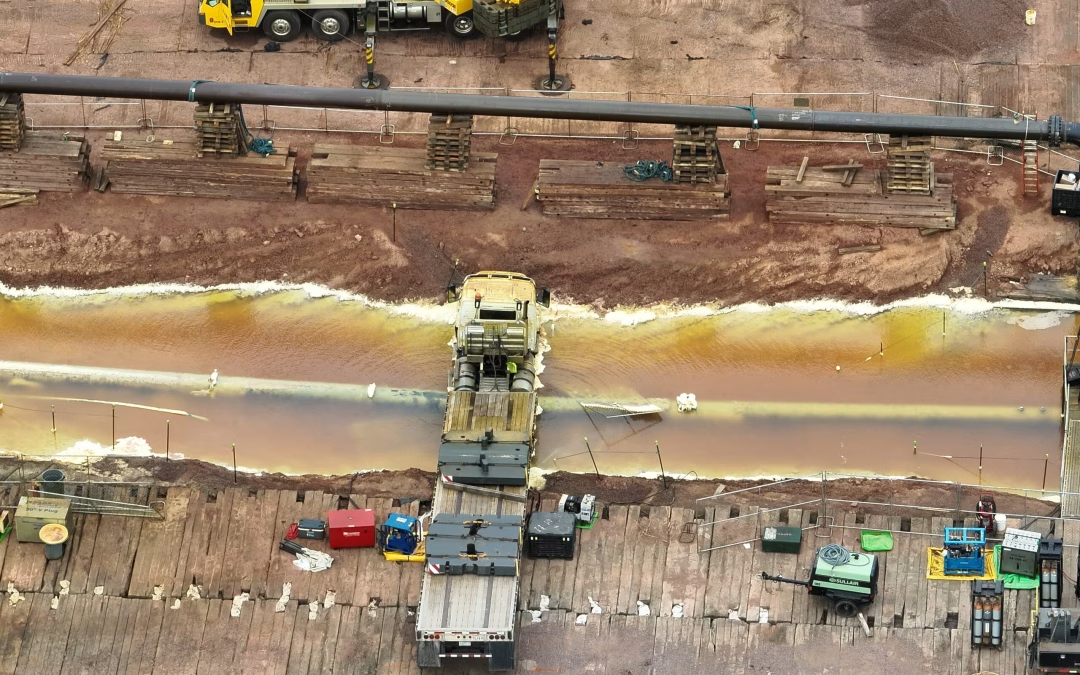
(Photo: Enbridge)
IRON COUNTY, Wisconsin — September 9, 2026 — A pipeline operated by Canadian energy company Enbridge has released approximately 1.3 million gallons of natural gas liquids into the atmosphere following an accident in northern Wisconsin, raising renewed questions about pipeline safety, environmental oversight and the future of a controversial energy project connected to the Great Lakes.
The incident occurred on August 25, when an unoccupied contractor truck rolled into an open excavation at a Line 5 valve construction site near Saxon, Wisconsin, striking the pipeline and releasing primarily propane and butane. No injuries were reported, but a nearby home was evacuated as a precaution, and the pipeline was taken out of service.
Federal data reviewed by Wisconsin Public Radio indicates the incident represents the largest reported oil and gas pipeline spill in Wisconsin in more than 50 years. Although the released substances largely vaporized rather than remaining as a conventional liquid oil slick, the scale of the incident has intensified scrutiny of a pipeline already at the center of a long-running dispute over environmental protection and energy infrastructure.
For communities across the Great Lakes region, the incident is another reminder that decisions involving aging energy infrastructure can have consequences extending far beyond a construction site.
A Construction Accident Forces Line 5 to Shut Down
The release began when a subcontractor’s parked truck moved into an excavation and struck the pipeline during work at a valve project in Iron County.
Enbridge isolated the affected section and began efforts to manage the remaining product. The company reported that approximately 31,000 barrels, equivalent to roughly 1.3 million gallons, of natural gas liquids were released. Because propane and butane rapidly vaporize under ordinary outdoor conditions, the incident primarily involved a release into the atmosphere rather than a persistent liquid spill across the surrounding landscape.
The distinction matters when assessing the environmental consequences. A large release of volatile hydrocarbons presents different risks from crude oil entering a river or lake, including concerns about flammability, air quality and exposure near the incident site.
Enbridge said its monitoring had found safe air quality outside the evacuation zone and that initial testing of surface water and a nearby residential well showed no impacts from the release. Those findings were based on the company’s reported monitoring and did not eliminate the need for continued independent oversight.
The pipeline remained shut down as crews worked to address the incident and establish a temporary bypass around the damaged section.
Wisconsin Officials Demand Answers
The scale of the release has drawn attention from state environmental officials, who have questioned Enbridge’s response and the broader safety record of work associated with the pipeline.
The Wisconsin Department of Natural Resources had asked the company to halt construction following the incident and provide information about the release, its response and potential public health consequences.
Federal pipeline regulators were leading the incident response. Wisconsin officials said their ability to assess the site directly had been limited while federal authorities managed the active emergency.
That division of responsibility has raised questions about how quickly state environmental officials can independently investigate an incident affecting Wisconsin residents and the surrounding environment.
The central issue is not simply how much material escaped. It is whether existing safeguards adequately protect nearby communities and whether state regulators have sufficient access to verify the environmental consequences of major infrastructure accidents.
The incident also underscores the importance of transparency when a company responsible for a major pipeline is simultaneously seeking approval for additional construction in the region.
Line 5’s Larger Great Lakes Controversy
Line 5 transports natural gas liquids and other petroleum products through the Great Lakes region, including a section beneath the Straits of Mackinac in Michigan, where Lakes Michigan and Huron meet.
The pipeline has become the subject of a prolonged dispute involving environmental organizations, Indigenous nations, state officials, energy companies and industries that depend on fuel supplies.
Critics argue that a major pipeline crossing environmentally sensitive areas presents unacceptable risks to freshwater resources. Supporters contend that Line 5 plays an important role in regional energy supply and that infrastructure improvements can reduce the likelihood of future accidents.
Enbridge has proposed rerouting a portion of the pipeline through a tunnel beneath the Straits of Mackinac. The proposal has faced years of legal and political challenges, including objections from Indigenous communities concerned about the potential consequences for treaty-protected resources and their relationship with the Great Lakes.
The Wisconsin incident is separate from the proposed Michigan tunnel, but it has renewed questions about the company’s safety practices and the risks associated with ongoing pipeline construction.
For a region whose drinking water, fishing industries, tourism economies and ecosystems depend on healthy freshwater resources, those questions carry considerable weight.
An Accident With Consequences Beyond Wisconsin
The immediate priority is to complete the response safely, establish the condition of the affected pipeline and determine whether the release caused environmental damage that requires remediation.
Investigators must also establish precisely how the contractor’s truck struck the pipeline, whether existing site protections were adequate and what measures are needed to prevent a similar incident.
The absence of reported injuries and the initial monitoring results are important, but they do not remove the need for a thorough investigation. Public confidence depends on independently verified findings rather than assurances alone.
The incident also arrives at a particularly sensitive moment for the future of Line 5. Decisions about the pipeline’s operation and proposed rerouting will affect not only energy infrastructure but also the environmental responsibilities shared by communities and governments throughout the Great Lakes basin.
The Great Lakes are among North America’s most important freshwater resources. Their protection requires careful planning, effective oversight and accountability when industrial accidents occur.
For Wisconsin, the Line 5 release is now a test of whether regulators can establish what happened, determine the full consequences and ensure that the lessons extend beyond the immediate response.
The pipeline may eventually return to service, but restoring operations is only one part of the challenge. The larger question is whether the safeguards surrounding major energy infrastructure are strong enough to protect the communities and ecosystems that live alongside it.