
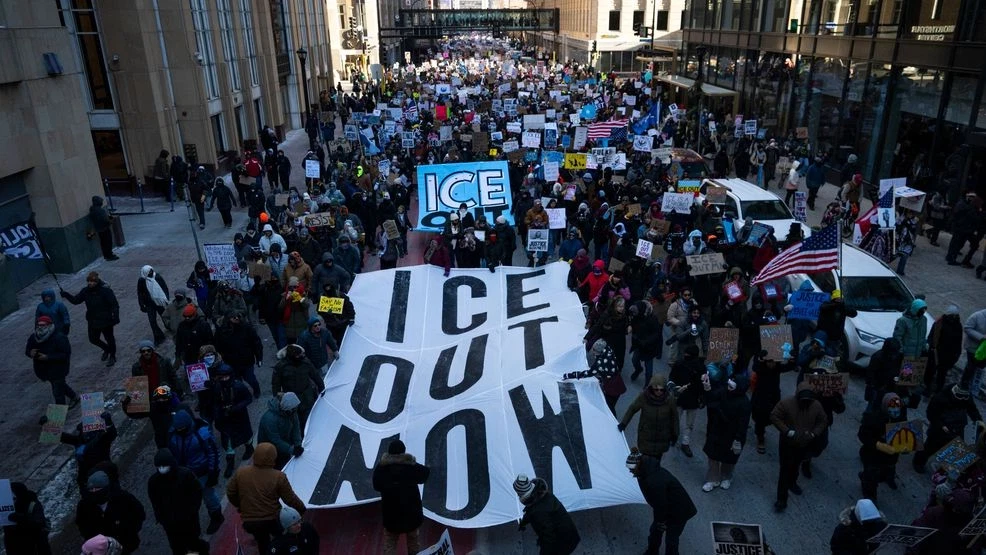
(Photo: Stephen Maturen/ Getty Images)
Minneapolis, MN — February 12, 2025
On February 12, 2026, the Trump administration announced a major scaling back of its federal immigration enforcement operation in Minnesota, following weeks of unrest, deadly encounters, and unprecedented public mobilization. The White House confirmed that approximately 700 ICE officers deployed to Minneapolis and Saint Paul would be withdrawn, signaling a tactical shift in one of the most controversial interior immigration campaigns of the president’s second term.
Operation Metro Surge Sparks Violence and Outrage
The operation, known as Operation Metro Surge, began in late 2025 with the stated goal of curbing illegal immigration and violent crime. But the campaign quickly became notorious for its heavy-handed tactics. Federal officers were involved in multiple confrontations with civilians, including the fatal shootings of Renee Good and Alex Pretti, both U.S. citizens. The incidents ignited widespread protests, viral social media coverage, and calls for accountability from civil rights groups and local leaders.
Minnesota’s Historic General Strike Amplifies Pressure
Compounding the unrest, January 2026 saw what many observers called the largest general strike in Minnesota’s recent history. Tens of thousands of workers across public transit, education, healthcare, and other sectors staged a coordinated three-day work stoppage to protest federal enforcement operations and broader social grievances. The strike effectively shut down major portions of Minneapolis and Saint Paul and drew national attention, highlighting the scale of public opposition to the metro surge.
Analysts say the combination of mass protests, the tragic deaths of Good and Pretti, and the unprecedented strike created intense political pressure on the Trump administration, contributing directly to Thursday’s decision to pull back ICE agents.
Federal Officials Frame the Move as Tactical
The White House described the withdrawal as a “tactical recalibration” rather than a full retreat. Thousands of federal agents remain in Minnesota, but officials emphasized a shift toward “smarter enforcement” and improved coordination with local authorities to reduce confrontations.
Critics, however, see the move differently. Republican hard-liners argue the administration is ceding ground to activists, while Democrats and immigrant advocates praise the withdrawal as a victory for civil liberties and community safety.
Local Authorities Demand Accountability
Minnesota state officials continue to press for transparency in the aftermath of the deadly encounters. The Hennepin County Attorney and Minnesota Attorney General have demanded access to evidence and federal cooperation in investigations, citing concerns that ICE operations violated civil liberties and local law. Governor Tim Walz framed the drawdown as a partial success for Minnesota communities but stressed that independent reviews of the shootings remain essential.
Implications for the Great Lakes Region
For communities across the Great Lakes region — including in Canada — the events in Minnesota resonate beyond state lines. Observers note that large-scale civic mobilization and labor action, combined with federal enforcement policy, have created a blueprint for how public pressure can influence national immigration strategy.
As of February 12, 2026, Minnesota stands as a key battleground in debates over federal enforcement, civil liberties, and local authority, with lessons for policymakers, activists, and cross-border observers alike.