
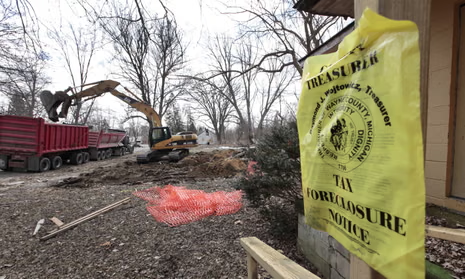
(Photo: Paul Sancya/ AP)
Detroit, MI — December 29, 2025
Detroit is facing a crisis buried in plain sight—literally. Hundreds of sites across the city, cleared through demolition programs meant to revitalize neighborhoods, may now be tainted with toxic soil, heavy metals, and asbestos-laden debris.
Initial tests in November 2025 revealed alarming contamination in backfilled demolition sites. By December 24, city officials confirmed that investigations are ongoing, but residents are already sounding the alarm about potential long-term health risks, particularly for children who play or live near these lots.
Who Is at Risk?
Lead, asbestos, and other industrial contaminants are known to cause serious health issues, including neurological damage and cancer. Families in historically underserved neighborhoods—often the very areas targeted for demolition and redevelopment—are disproportionately exposed.
Residents report concerns that demolition contractors may have been cutting corners, bringing in fill dirt from unknown or unsafe sources, and leaving hazardous debris buried without proper remediation. “It’s like the city is building new homes on a toxic time bomb,” one local parent told reporters.
A Pattern of Neglect
This isn’t the first time Detroit’s demolition programs have come under scrutiny. Critics have argued that speed and cost-cutting often take priority over safety and transparency. The latest revelations underscore the consequences: when the rush to remove blight meets lax oversight, entire communities can be put at risk.
What Comes Next?
City officials say they are working with state environmental agencies to test and remediate contaminated sites. But as of December 29, there’s little clarity on how many lots are affected, how residents will be protected, or whether the responsible parties will be held accountable.
Detroiters are demanding answers: What exactly was dumped under their feet? Who approved it? And why weren’t public health safeguards enforced?
The crisis raises a broader question about urban redevelopment in post-industrial cities: can progress ever come at a cost too high to bear? In Detroit’s case, the cost may already be counted in years of public health consequences.