
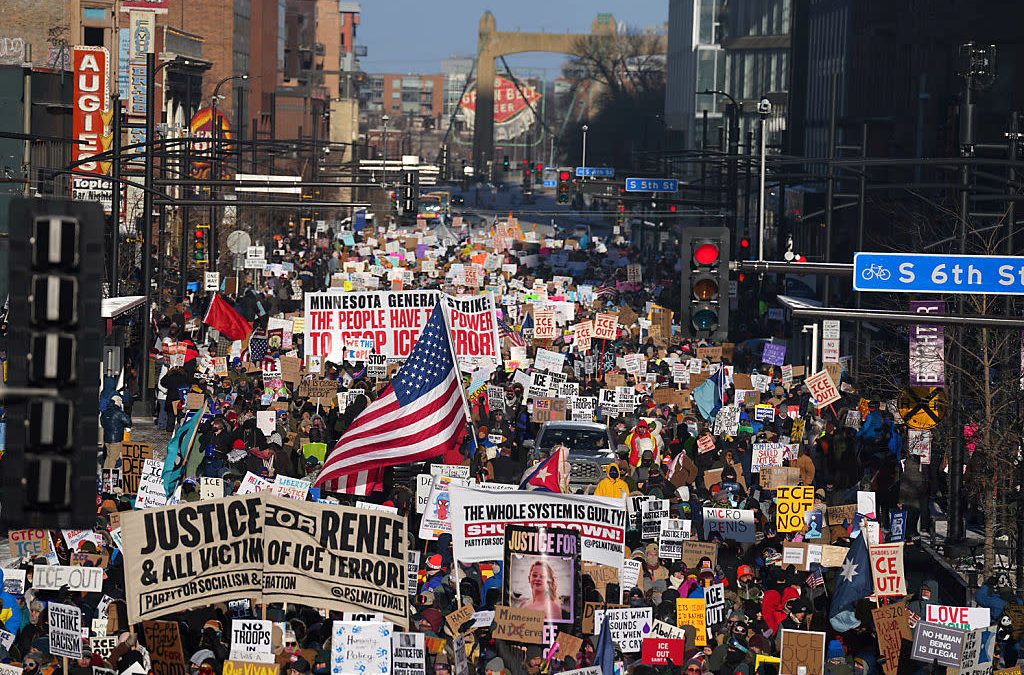
(Photo: Star Tribune)
Minneapolis, MN — January 23, 2026 — Tens of thousands of Minnesotans took part in a large‑scale general strike and economic blackout across the state today to protest the expanded presence of federal immigration authorities and recent fatal shootings by agents of U.S. Immigration and Customs Enforcement (ICE). Organizers described the coordinated action as the “Day of Truth & Freedom,” calling on residents to stay home from work, school, and shopping in solidarity against what they termed federal overreach and violence. (en.wikipedia.org)
The strike — the first of its kind in Minnesota since the 1930s and one of the most significant civil actions in the state in decades — drew support from labor unions, faith leaders, community groups, students, and local businesses. Many institutions and storefronts across the Twin Cities and other communities closed for the day, with hundreds of local museums and galleries pausing operations in solidarity. (theartnewspaper.com)
‘No Work. No School. No Shopping.’
Organizers urged residents to halt everyday economic activities as a form of protest against Operation Metro Surge, the federal immigration enforcement campaign that brought thousands of Department of Homeland Security agents to Minnesota and intensified detentions and raids across the state. The action followed days of sustained outrage over the deaths of Renée Good and Alex Pretti, both killed during encounters with federal agents earlier this month. (britannica.com)
At street rallies and marches in Minneapolis and St. Paul, protesters braved bitter cold and snow to demand that ICE be removed from the state, federal agents be held accountable for what many described as aggressive and unconstitutional tactics, and migrant communities be protected rather than targeted. (cbsnews.com)
Broad Participation and Solidarity
The strike was backed by dozens of labor unions and community organizations, including major local chapters of the American Federation of State, County and Municipal Employees (AFSCME), the Communications Workers of America (CWA), the Service Employees International Union (SEIU), and others. Many members and supporters joined protests or honored the strike call by abstaining from work and encouraging their neighbors to participate. (en.wikipedia.org)
Student groups at the University of Minnesota also joined the action, with some student unions calling for continued demonstrations and expanded strike activity later this week. (minneapolimedia.town.news)
In Minneapolis, clergy members and faith leaders played a visible role, with about 100 arrested during a prayer and refusal‑to‑move action at the Minneapolis–Saint Paul International Airport — a symbolic protest against the use of deportation flights. (en.wikipedia.org)
Voices from the Streets
Protesters carried signs reading slogans such as “ICE OUT NOW,” and “Stop the Surge,” emphasizing calls for federal immigration agents to withdraw from Minnesota and for accountability for the deaths of residents in enforcement operations. Demonstrators also criticized what they viewed as the federal government’s militarized approach. (theguardian.com)
Many small businesses and cultural institutions supported the general strike without mandating closures, choosing instead to demonstrate solidarity with immigrant communities and strike organizers. (theartnewspaper.com)
Political and Legal Backdrop
The strike comes amid heightened tensions between Minnesota officials and the federal government. Minnesota’s attorney general and city leaders have previously sued the federal government over the surge in immigration enforcement, calling it unconstitutional and harmful to residents’ civil rights. (cleveland19.com)
Federal officials have defended the enforcement operations as necessary to uphold immigration law, though they have faced criticism from local leaders, civil rights advocates, and community members who argue that such actions erode public trust and safety. (britannica.com)
Looking Ahead
Student unions and labor groups have called for additional coordinated actions, including a potential nationwide general strike or expanded statewide demonstrations scheduled for January 30, 2026, under the banner of a “National Shutdown” to further oppose federal immigration policies and pressure policymakers for change. (minneapolimedia.town.news)