
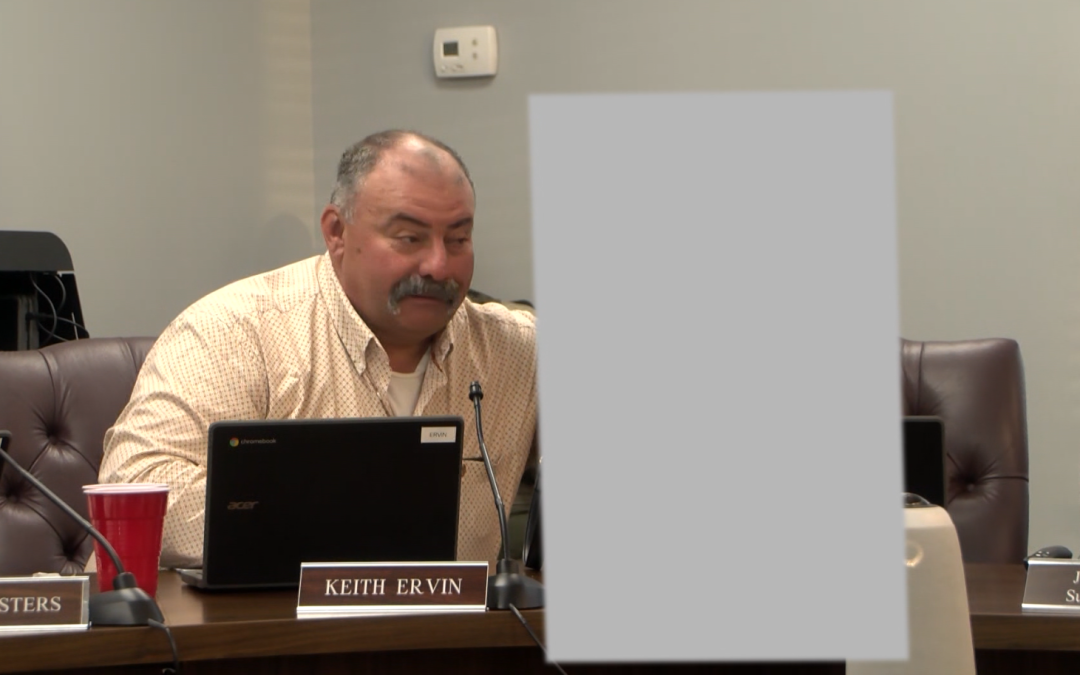
(Photo: Washington County BOE/ W)
Jonesborough, TN — April 2, 2026
Washington County Board of Education member Keith Ervin has sparked widespread outrage after making an inappropriate comment toward a teenage student during a public board meeting. During the session, which was livestreamed, Ervin reportedly leaned toward the student, placed his arm around her, and said, “God, you’re hot. Do you know that? Where do you go to school at?” The comment, directed at a minor, immediately drew criticism from parents, community members, and fellow board officials.
Public Backlash and Petition
In response, residents quickly organized a petition calling for Ervin’s resignation or removal. By early April, the petition had gathered more than 2,500 signatures, with organizers also planning a peaceful protest at 4 p.m. on April 8, 2026, demanding accountability. Community members described the remark as objectifying and predatory, emphasizing the inappropriate sexualization of a minor in a formal, public setting.
School Board Response
The Washington County Board of Education scheduled an emergency meeting for April 8 to address the incident. While the board condemned Ervin’s comment as “grossly inappropriate” and emphasized the importance of professionalism, Tennessee law prevents the board from directly removing an elected member. The board can, however, issue a formal censure — a public reprimand that does not remove Ervin from office.
Recall Election as the Only Legal Option
Under Tennessee law, an elected school board member can only be removed before the end of their term through a recall election, which requires a significant number of registered voters in the district to petition for a special election. Ervin is also on the ballot for re-election in May 2026, giving voters another opportunity to hold him accountable.
Broader Implications
The incident has sparked wider conversations about professional conduct, power dynamics, and the sexualization of minors by adults in positions of authority. Many in the community argue that even if Ervin intended the comment as a compliment, the context and his role as a board member make the behavior unacceptable and potentially predatory.
Conclusion
This episode serves as a stark reminder that adults in positions of authority must maintain professional boundaries and protect the minors they are entrusted to serve. As the emergency board meeting and community protests approach, Washington County faces a defining moment to assert accountability and reaffirm standards for those in public office.