
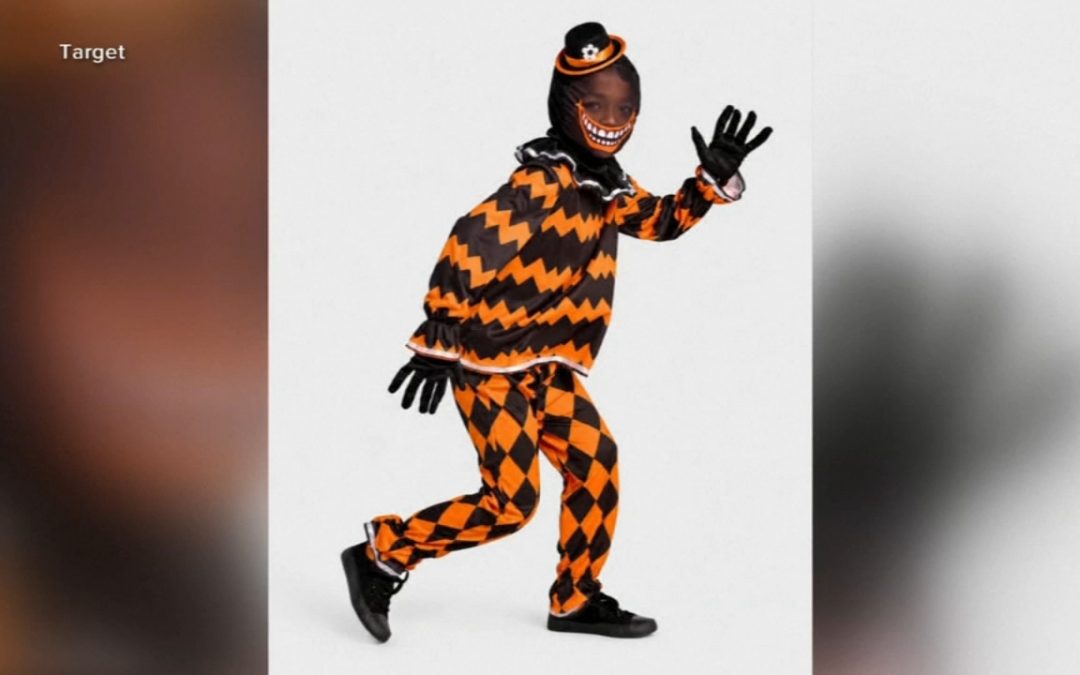
(Photo: Target)
MINNEAPOLIS, Minnesota — August 25, 2026 — There was a time when Target seemed to understand exactly what kind of company it wanted to be.
The Minneapolis-born retailer proudly wrapped itself in the language of diversity, inclusion and community. It was a major corporate presence at Minneapolis Pride. Its stores prominently celebrated LGBTQ customers. Its advertising reflected a deliberately diverse America. Target didn’t merely sell the idea of inclusion.
It made inclusion part of the brand.
That version of Target feels increasingly distant.
Now the company is apologizing for a children’s Halloween costume that critics said evoked racist caricature, pulling the product after the backlash and promising to investigate how it ever made it through the company’s review process.
The costume itself is disturbing.
The larger story is what happened to Target along the way.
From Minneapolis Pride to Corporate Retreat
Target was once one of the most recognizable corporate supporters of Minneapolis’s LGBTQ community.
The retailer’s presence at Pride was not a footnote. Target was a major sponsor of Minneapolis Pride and invested heavily in presenting itself as an ally to the city’s LGBTQ community.
That image became inseparable from the Target brand.
The company understood that its customers were not simply shoppers. They were people living in communities, raising families and looking for businesses that reflected their values.
Then the political environment changed.
Target became a target.
The backlash over its 2023 Pride merchandise demonstrated just how quickly a company’s embrace of inclusion could become a political liability. Threats and protests followed, and Target subsequently pulled some Pride merchandise and changed how it approached its LGBTQ-themed offerings.
The company later announced significant changes to its diversity, equity and inclusion efforts.
Whether every change was directly caused by political pressure is impossible to reduce to a single explanation.
But the broader trajectory is undeniable.
Target went from loudly advertising its commitment to inclusion to becoming much more cautious about demonstrating it.
And Then Came the Halloween Costume
That history makes the latest controversy especially jarring.
Target pulled its “Kids’ Glows Under Blacklight Circus Clown” Halloween costume after customers and critics raised concerns that its design resembled racist Blackface and minstrel-era imagery.
Target apologized.
The product disappeared.
But the obvious question remains:
How did nobody see this before it went on sale?
A company doesn’t accidentally create an entire retail product overnight.
Designers are involved.
Merchandising teams are involved.
Buyers are involved.
Marketing teams are involved.
Photographers are involved.
Corporate review processes are involved.
Yet somehow a children’s costume containing imagery that many customers immediately recognized as deeply offensive made it through that entire chain.
That is not merely a Halloween problem.
It is a corporate culture problem.
Target Used to Know Why Representation Mattered
This is where Target’s history matters.
The company once understood that representation was not something to be embraced only when it was convenient.
It was part of the company’s identity.
That did not mean Target was perfect.
No corporation is.
But there was a recognizable philosophy behind the brand: Minnesota values, community involvement and a willingness to publicly associate itself with diversity even when doing so attracted criticism.
That willingness has diminished.
Target’s retreat from some of its previous DEI commitments has been accompanied by a more cautious public posture.
The company has had every right to reconsider its corporate policies.
But there is a difference between changing a policy and losing sight of the principles that were supposed to guide the organization.
The Halloween controversy makes that distinction uncomfortable.
Politics Changed the Equation
Target didn’t become cautious in a vacuum.
Corporate America has spent years caught between competing political pressures.
Companies that once advertised themselves as socially conscious discovered that diversity initiatives could make them targets for boycotts, protests and political campaigns.
Target experienced that pressure firsthand.
The result has been a broader corporate retreat from the aggressive diversity messaging that became common in the late 2010s and early 2020s.
Target is not the only company to retreat.
But because Target once embraced the role so visibly, the change feels particularly stark.
The retailer went from being one of the companies most willing to plant a flag in the ground on social issues to one that increasingly appears determined not to plant a flag anywhere.
That may be good business strategy.
It makes for a remarkably bland brand.
There Is Nothing Wrong With Changing Course
Target’s executives can argue that the company needed to respond to changing customer attitudes.
They can argue that corporations shouldn’t be political organizations.
They can argue that merchandise should be merchandise.
All of those arguments are legitimate.
But a company cannot spend years building its identity around inclusion and then expect customers to ignore the retreat.
Brand identity is not a light switch.
You don’t turn it on when diversity is popular and turn it off when political pressure arrives.
If Target wants to be a neutral retailer, that’s its prerogative.
But neutrality has consequences.
The company risks losing the very sense of personality that once separated it from every other giant retailer.
Minneapolis Deserves Better
There is something particularly sad about watching this happen to a company so deeply associated with Minneapolis.
Target was not merely another national chain headquartered somewhere in Minnesota.
It was part of the city’s corporate identity.
Its stores became synonymous with a particular Midwestern sensibility: modern, welcoming, colorful and community-minded.
The company’s relationship with Minneapolis Pride embodied that image.
That is why today’s Target can feel so unfamiliar.
The issue isn’t that a corporation changed its policies.
The issue is that the company once seemed genuinely proud of what those policies represented.
Now, after years of political pressure and corporate retreat, Target risks becoming something much less distinctive: another enormous retailer trying desperately not to offend anyone.
And ironically, in trying not to become political, it may have surrendered part of the identity that made people care about it in the first place.
The Costume Is the Symptom
The Halloween costume should never have reached the shelves.
Target was right to remove it.
Target was right to apologize.
But the company should not stop there.
It needs to explain how its review process failed and whether the retreat from its previous diversity and inclusion posture has affected the way products are evaluated.
Because this isn’t ultimately about a clown costume.
It’s about whether Target still has a coherent idea of who it wants to be.
The old Target was loud about inclusion.
It showed up at Pride.
It celebrated diversity.
It accepted that standing for something would inevitably anger someone.
The new Target seems far more interested in avoiding the fight.
That may protect the company from today’s political backlash.
But it also risks turning one of America’s most recognizable retailers into exactly what nobody wants from a brand they once loved:
A bland, cautious, lifeless version of its former self.
And if Target truly wants to find its way back, the first step isn’t another apology.
It’s remembering what made people believe in Target in the first place.