
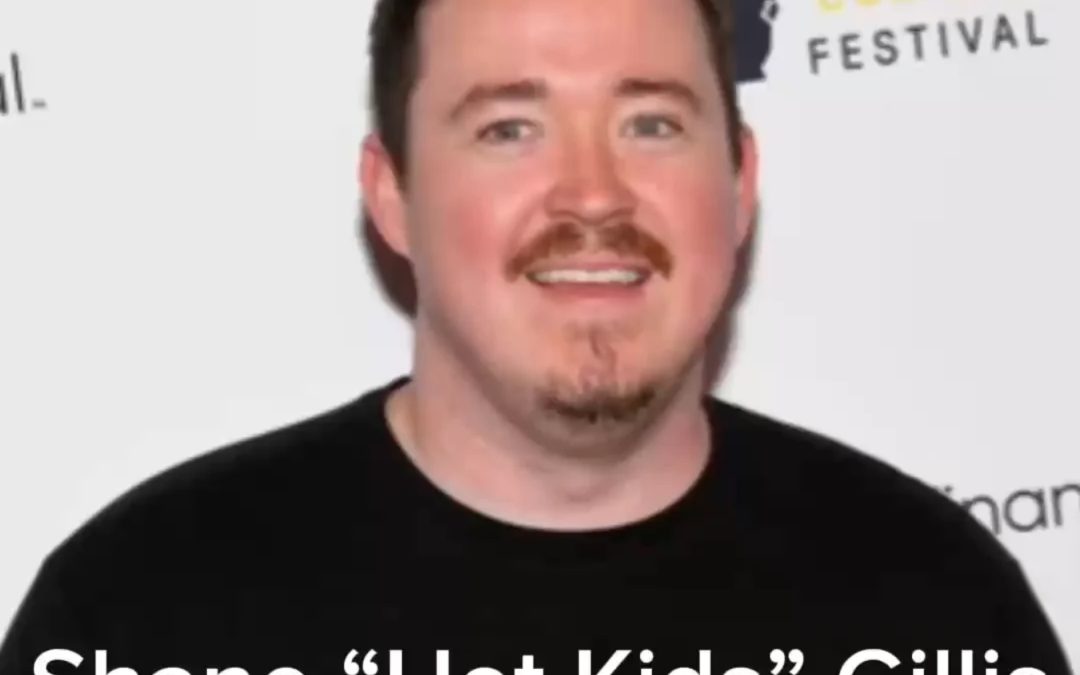
(Photo: Reddit)
Austin, TX — October 15, 2026 — Imagine an ordinary man standing in a room full of people, repeatedly talking about how attractive he finds middle-school girls. Imagine him discussing seventh- and eighth-grade volleyball players, commenting on their clothing and describing underage girls in sexualized terms. Imagine him making these remarks while the people around him laugh and encourage him to continue.
Would people dismiss him as a comedian pushing boundaries? Would they congratulate him for being edgy? Or would they question why an adult man was talking about children that way in the first place?
Those questions are worth asking after clips of comedian Shane Gillis discussing underage girls at volleyball games resurfaced online. The footage, compiled from episodes of Matt and Shane’s Secret Podcast and Gillis’s 2021 stand-up special Live in Austin, has prompted criticism over remarks concerning girls reportedly between 14 and 18 years old, including younger students playing middle-school volleyball.
The issue is not whether comedians should be allowed to make offensive jokes. They should be able to explore uncomfortable subjects without every controversial punchline becoming a criminal investigation.
The issue is why a celebrity’s status as a comedian can become a shield against scrutiny that an ordinary person might never receive.
Would Anyone Else Get the Same Benefit of the Doubt?
There is a difference between making a joke about a disturbing subject and repeatedly making comments that appear to sexualize children.
Context matters. So do intent, wording and the circumstances in which something is said. A comedy routine can involve fictional scenarios, deliberate exaggeration and characters whose views are not necessarily those of the performer.
But calling something comedy does not automatically settle the question of whether it deserves criticism.
The clips circulating online reportedly show Gillis discussing girls playing volleyball at middle school and high school levels, making remarks about their appearance and using sexualized language. The younger students involved are children, and the fact that they happen to be participating in a sporting event does not make their appearance an appropriate target for sexual commentary.
If an ordinary adult repeatedly made comparable remarks about middle-school girls in a workplace, at a school event or in a conversation with parents, people would have legitimate reasons to question that person’s judgment.
That does not mean every person who makes an offensive joke should automatically be labeled a sexual predator. Those are different claims, and the distinction matters.
But the reverse is also true: a person’s career in comedy should not automatically exempt their words from the same basic scrutiny applied to everyone else.
Why should a famous comedian receive an entirely different standard simply because he has a microphone, a Netflix special and an audience willing to laugh?
The Comedy Defense Cannot Explain Everything
Gillis has built a career around material that deliberately provokes audiences. His style frequently involves saying things that would be considered offensive in ordinary conversation and relying on the discomfort, surprise or recognition they produce.
There is nothing inherently wrong with provocative comedy. Some of the most effective comedy challenges conventional thinking, exposes hypocrisy or forces audiences to confront uncomfortable subjects.
But provocation alone is not proof of insight, and offensiveness is not automatically evidence of comedic genius.
When a comedian repeatedly returns to a subject, audiences are entitled to ask what makes that subject funny to him and why the material resonates with his audience.
In the case of the resurfaced volleyball clips, that question is particularly uncomfortable because the subject involves minors.
The laughter of an audience does not establish what every person in the room believes. People laugh for different reasons, including shock, nervousness and the desire to fit in. Nor can a recording establish a performer’s private intentions with certainty.
Still, the audience’s reaction does not make the underlying subject immune from criticism. A joke can be popular and still deserve serious examination.
The question is not whether Gillis has the legal right to make the jokes. The question is why the comedy label is so often treated as the end of the conversation rather than the beginning of one.
A Double Standard for Famous Men?
Celebrity culture has a habit of turning controversy into entertainment. A famous person says something outrageous, the clip spreads, supporters defend the comedian, critics object, and the argument becomes another source of publicity.
Eventually, the discussion often shifts away from the original remarks and toward whether the comedian is being unfairly targeted.
That shift can obscure the most basic question: What was actually said?
In Gillis’s case, the criticism concerns remarks reportedly involving girls young enough to be in middle school. The appropriate response is to examine the original recordings, establish the exact wording and context, and judge the material honestly.
Instead, some defenders of controversial comedy treat any criticism as an attack on free speech. Others assume that because the material was delivered onstage or on a podcast, the audience should understand it as harmless entertainment.
Neither assumption is sufficient.
Freedom of expression protects the ability to make offensive jokes. It does not require the public to find those jokes acceptable, and it does not prevent people from questioning the judgment of the person making them.
Gillis should be able to perform comedy. The public should equally be able to ask why sexualized remarks about underage girls form part of that comedy.
Those two principles are not contradictory.
If the Subject Is Children, Scrutiny Should Be Consistent
The most troubling aspect of this controversy is the possibility that the celebrity-comedy label can cause people to lower their standards for remarks they would otherwise find disturbing.
Imagine a different public figure making comparable comments about 13- or 14-year-old girls. Would the public reaction be the same? Would the comments be dismissed as a comedian’s deliberately provocative style, or would people demand an explanation?
We cannot know exactly how every hypothetical case would unfold. But the comparison raises a legitimate question about whether fame, wealth and a loyal audience influence how seriously people take concerning statements.
That is why the original footage matters. The complete recordings should be examined rather than relying exclusively on short excerpts, online interpretations or the defenses of fans.
If the full context changes the meaning of a remark, that context should be considered. If the remarks are accurately represented and remain troubling when viewed in full, that should be acknowledged too.
And if genuinely independent evidence were ever to raise a credible concern about criminal conduct involving minors, the appropriate authorities should assess that evidence under the same legal standards that apply to anyone else.
There is no justification for conducting an invasive search of someone’s private devices simply because their comedy is offensive. A search of that nature requires an appropriate legal basis, not internet speculation.
But neither should a celebrity be treated as beyond scrutiny when legitimate evidence warrants further investigation.
The standard should be evidence, not fame.
The Question Is What We Are Willing to Excuse
This controversy is ultimately about more than one comedian. It is about the cultural instinct to defend entertainers whose work appeals to us, even when the material deserves uncomfortable questions.
People can enjoy a comedian’s work without defending every joke he makes. They can support free expression without pretending every expression is harmless. And they can criticize material involving minors without claiming to know the private thoughts or intentions of the person who performed it.
Those distinctions should not be difficult to maintain.
Gillis’s defenders are entitled to argue that the remarks were intended as jokes. Critics are equally entitled to examine the content and argue that the material crosses a line. What neither side should do is substitute assumptions for evidence.
The most important question is not whether Gillis should be allowed to tell offensive jokes. He should.
It is whether the word “comedy” has become an automatic excuse for remarks that would otherwise prompt serious questions about an adult’s judgment.
If an ordinary person made repeated sexualized comments about middle-school girls, we would not be obligated to laugh, applaud or pretend the subject was unremarkable. We would be entitled to question the remarks and expect an honest explanation.
A famous comedian should not be exempt from that basic standard.
Being a comedian is a profession, not a free pass. And when the subject is children, the public should not have to suspend its judgment simply because an audience is laughing.