
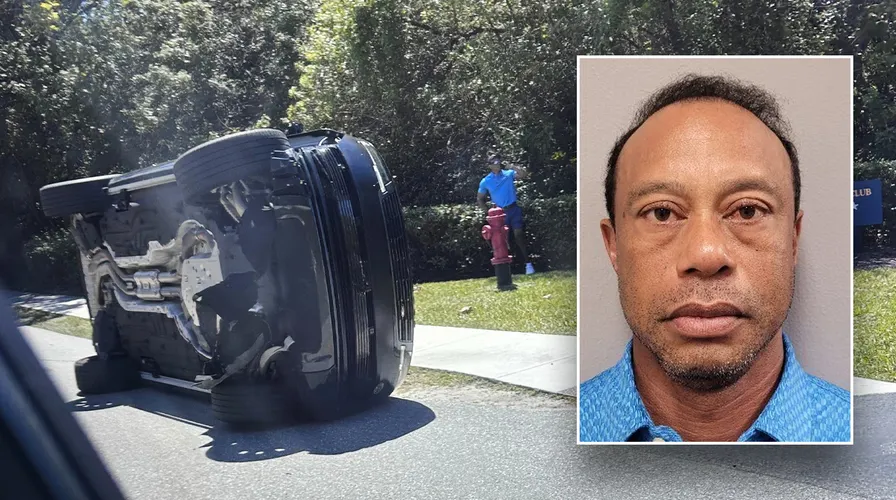
(Photo: AP)
Stuart, FL — March 27, 2026
Tiger Woods’ arrest today following a DUI‑related rollover crash in Jupiter Island, Florida, is more than just another headline about a fallen sports legend. It underscores a deeper truth about fame in America: celebrity privilege can warp personal accountability and create the illusion that status affords protection from consequences everyone else must face.
After the crash, body‑cam footage released by authorities showed Woods telling police he had “just been talking to the President,” referring to President Donald Trump, who is currently in office. That moment — overheard by deputies at the scene — speaks volumes about how high‑profile figures like Woods view their own place in society.
It isn’t far‑fetched, in an opinion piece like this, to read that call not simply as a personal phone call, but as a symbolic attempt — whether conscious or reflexive — to invoke influence in a moment of crisis. Woods’ life has been punctuated with moments where status and connections seemed to matter more than responsibility. From previous scandals to legal scrapes, he has increasingly operated within a world where fame blurs accountability.
This is not Woods’ first DUI‑related arrest. His earlier arrest in 2017 resulted in minimal legal fallout relative to what many ordinary citizens would face. Yet now here we are again, nearly a decade later, with a similar pattern: a serious incident, public forgiveness, and the comforting buffer of celebrity goodwill.
Fueled by a belief that his name and network can bend reality, Woods appears to expect that even today’s charges — including DUI, property damage, and refusal to submit to a lawful test — will be handled with kid gloves. The very suggestion of presidential involvement at the scene reinforces a troubling cultural message: if you’re famous enough, the rules are negotiable.
This isn’t just about Tiger Woods. It’s about what we’ve collectively normalized in celebrity culture — the assumption that connections, privilege, and legacy can insulate someone from consequences that others without fame must accept unflinchingly. When public figures lean on their star power or powerful friends, it warps public expectations of justice and equality. Fans are left torn between admiration for achievements and frustration at repeated lapses in judgment.
At some point, legacy should require more than trophies and endorsements. If Woods truly hopes to emerge from this greater than before, he must confront a truth celebrities often avoid: fame doesn’t grant exemption from responsibility. The sooner public figures internalize that, the sooner we can stop celebrating talent while excusing troubling behavior.
Tiger Woods’ call to the president — and what it represents — serves as a stark reminder that celebrity privilege can only shield someone for so long. The question now isn’t just legal: it’s moral. Will Woods reckon with the consequences of his actions as an individual, or continue leaning on fame and influence as a shield? Time — and accountability — will tell.