
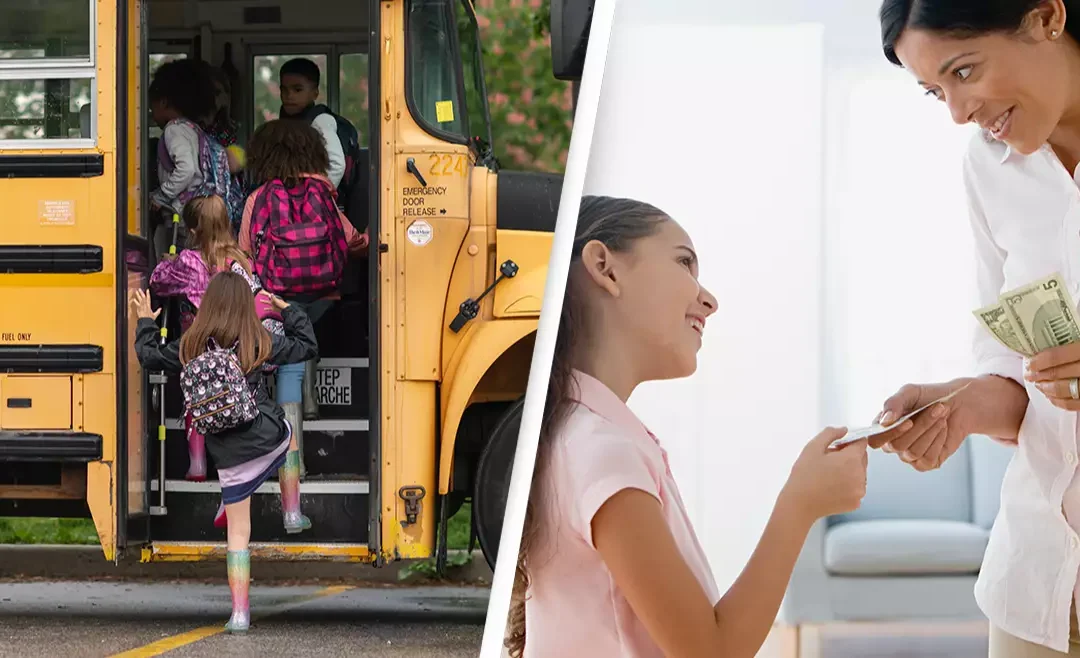
(Photo: Unilad)
Charleston, SC — August 12, 2025
Chronic absenteeism continues to plague schools across the United States, undermining student achievement and dragging down graduation rates. In 2025, one of the most talked‑about responses comes from Charleston County, South Carolina, where an innovative pilot program is paying families directly — $25 per week — for each student who maintains perfect school attendance. This isn’t a theoretical policy discussion anymore; it’s happening now, and early data suggests the idea deserves serious consideration.
Launched on March 10, 2025, the Charleston County School District program encourages students in ten selected schools and grades to show up every day. Families receive the weekly incentive on a debit card that can be used for essentials like gas, transportation, utilities, and food only if their child attended school every day that week. The pilot runs through May 16, 2025.
Early results from the district report significant increases in perfect attendance across participating schools within the first few weeks, with most grade levels showing double‑digit improvements compared with previous attendance patterns.
This approach sits at the intersection of policy innovation and behavioral economics. Incentives — especially small but consistent rewards — have been used in other social contexts to encourage positive habit formation, from health behaviors to employment programs. While long‑term impacts on academic performance are still under study, higher attendance itself is a powerful predictor of academic engagement and success. Students who come to class regularly have more instructional time, greater exposure to core lessons, and more opportunities to build relationships with teachers and peers — all essential ingredients for learning.
Critics of incentive programs often worry about motivation dependency — that students will only attend for the money and disengage once payments stop. Yet supporters argue that attendance incentives can provide an initial boost that helps students and families overcome short‑term barriers such as transportation, work obligations, or family care responsibilities. When paired with supportive school environments and mentoring, the hope is that improved attendance leads to stronger intrinsic engagement over time.
Globally, similar conditional cash transfer programs tied to education — such as historical initiatives in Latin America — have shown increased enrollment and retention, particularly among lower‑income students. Although the mechanisms differ, the principle is the same: reducing the immediate opportunity costs of attending school can make education a more attainable priority for families.
The Charleston pilot isn’t a silver bullet, but the early data points to a simple truth: when students are physically present at school, they’re in a better position to learn. As districts nationwide search for ways to beat absenteeism and improve outcomes, direct financial incentives — paired with coaching, transportation support, and community engagement — should be part of the conversation.
School attendance isn’t just a metric — it’s the first step toward opportunity.