
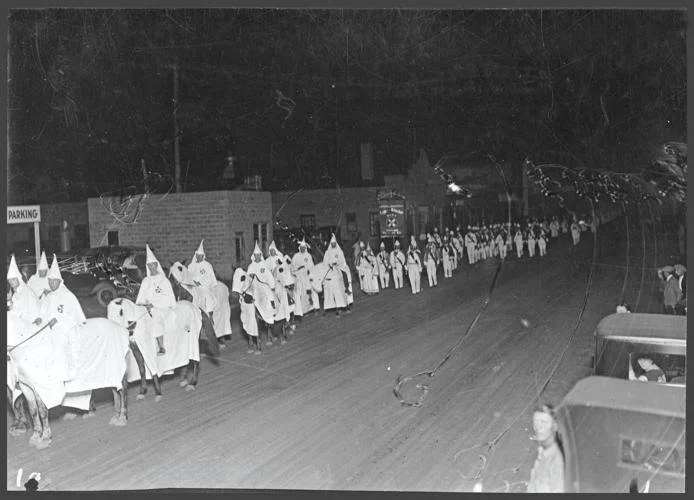
(Photo: Southern Minn)
St. Paul, MN — March 12, 2025
Minnesota likes to think of itself as a progressive state, but the reality is far more disturbing. From cross burnings and massive Ku Klux Klan rallies to lynchings and the forced expulsion of Black residents, the state’s history is stained with racial terror — and its echoes are still felt today. Racist ideologies didn’t vanish with a generation; they evolved, resurfaced, and continue to shape how communities of color are treated.
In Duluth on June 15, 1920, a mob lynched Elias Clayton, Elmer Jackson, and Isaac McGhie, three Black circus workers falsely accused of a crime. The men were dragged to a light pole, beaten, and hanged in front of thousands. Across Minnesota, towns like Austin forcibly drove Black families out multiple times, while Albert Lea hosted one of the largest Klan rallies in the state, openly celebrating white supremacy. These weren’t isolated events — they were part of a systematic effort to intimidate and control who could live, work, and thrive in Minnesota.
Research by Minnesota historian Nancy Vaillancourt has helped document these events and the Klan’s broader influence in the 1920s. Her work provides a vital record for understanding how white supremacist movements once took hold in communities across the state. Readers interested in exploring this history further can look to her studies and public presentations on Minnesota’s hooded past.
These historical acts of terror laid a foundation for persistent racial inequities. Decades later, the murder of George Floyd in Minneapolis reminded the world that systemic racism is alive and present. Communities of color continue to face targeted violence, unequal policing, and entrenched discrimination. Somali Minnesotans, for example, have endured waves of harassment and hate crimes fueled by anti-immigrant sentiment — echoing the same patterns of fear and exclusion established nearly a century ago.
Racism in Minnesota has never disappeared; it has simply changed shape. Historical terror against Black residents and immigrant communities set a precedent that allowed prejudiced attitudes to flourish in subtle and overt ways, from housing segregation to anti-immigrant policies, to attacks on neighborhoods and cultural centers. The state’s past is not a distant story — it informs the present, shaping who is safe and who is targeted.
Acknowledging Minnesota’s history of racial terror isn’t about dwelling on the past. It’s about understanding the continuing effects of these heinous acts and confronting the ideologies that allowed them to persist. Until the state fully recognizes the continuity of hate, from lynchings and Klan rallies to modern-day anti-Black and anti-Somali hostility, Minnesota will struggle to achieve justice and equality for all its residents.