
(Photo: HBO MAX)
London, England, UK — March 26, 2026
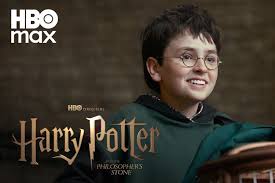
The first trailer for the new Harry Potter series makes one thing clear: HBO has created something visually striking, ambitious, and designed to succeed. The scale is bigger, the tone more layered, and the promise of a faithful, long-form adaptation is enough to draw global attention.
But that’s also exactly the problem.
For all its craftsmanship, this reboot feels less like a bold creative step forward and more like another example of an industry stuck looking backward. Hollywood today is dominated by familiar intellectual property—reboots, remakes, sequels, and spin-offs that rely on existing audiences rather than taking risks on new ideas. The return of Harry Potter, one of the most successful franchises of all time, only reinforces that pattern. It’s not a creative gamble; it’s a financial strategy.
And it’s starting to wear thin.
There was a time when major studios balanced big-name franchises with original storytelling—films and series that introduced new worlds, new characters, and new voices. Now, those original projects often feel sidelined in favor of what is already proven to sell. The result is an entertainment landscape that can feel repetitive, predictable, and, at times, creatively stagnant.
Another point of debate is the casting of Severus Snape, portrayed in the new series by Paapa Essiedu. While diverse casting can bring fresh perspectives to familiar stories, it also raises questions about how certain character dynamics will translate on screen. In the original Harry Potter, Snape is introduced largely through Harry’s point of view—as a teacher who appears hostile, unfair, and deeply resentful. That tension is central to how audiences understand him, especially before his backstory is revealed.
Reinterpreting the character through a different lens isn’t inherently a problem, but it shifts the context in which that hostility is perceived. Traits that were originally framed as personal bitterness or emotional immaturity may be read differently depending on how the character is portrayed and how the story chooses to handle those dynamics. That puts added responsibility on the writing. If the series aims to deepen its characters, as it claims, it will need to carefully navigate how Snape’s behaviour is contextualised—ensuring that what once read as a flawed, complex individual does not become something more one-dimensional or unintentionally reframed.
There’s also a broader issue the series cannot escape. By moving forward with this reboot, the studio is not just revisiting a beloved story; it is renewing its financial and cultural investment in J. K. Rowling, whose public comments on transgender issues have sparked widespread criticism in recent years. Her role as an executive producer ties the project directly to that ongoing conversation—whether the show itself engages with it or not. In today’s media landscape, where audiences are increasingly conscious of the values behind the content they consume, that connection matters. Choosing to invest in this series is not just about storytelling; it is about who benefits from it, and whose voice is amplified in the process.
The reboot also arrives with baggage that goes beyond recent controversies. Rowling’s work has long faced criticism over its handling of race and representation, with examples like Cho Chang often cited as reductive or poorly conceived. Revisiting the same core story without meaningfully addressing those criticisms risks repeating them—especially when the industry now has far more awareness and fewer excuses.
What makes this particularly frustrating is that the wizarding world is vast and largely unexplored on screen. Instead of retelling a story audiences already know, the studio could have invested in something new: a series focused on the Order of the Phoenix during the First Wizarding War, or entirely different corners of the magical world. One especially compelling option would have been Uagadou, the African wizarding school known for wandless magic. A setting like that could have offered not just visual and cultural freshness, but a genuine opportunity to expand the universe in a way that feels modern, inclusive, and creatively ambitious. Choosing a reboot over those possibilities doesn’t just feel safe—it feels like a missed opportunity.
For viewers, all of this adds up to something larger than a single show. The excitement of revisiting a familiar world is now competing with a growing fatigue—one shaped by constant reboots and a lack of truly original storytelling. The new Harry Potter series may well succeed on its own terms. With Francesca Gardiner and Mark Mylod at the helm, there’s reason to believe it will be thoughtful, detailed, and carefully made.
But its existence still raises a larger question about priorities: what stories aren’t being told because studios keep returning to ones that already have a built-in audience? If the industry continues down this path, it risks alienating the very viewers it depends on—people who are not just looking for comfort and nostalgia, but for originality, surprise, and creative ambition. There is an appetite for new ideas. The challenge is whether studios are willing to invest in them.
Because at some point, no matter how polished the reboot, audiences may simply stop showing up—not out of cynicism, but out of boredom. And when that happens, even the most magical franchises won’t be enough to bring them back.