

(Photo: Mower County Court and Facebook)
Austin, Minnesota — February 6, 2025
One year after a contested conciliation court hearing in Austin, Minnesota, the record of a wage-theft case involving former Mower County Commissioner Anthony Samuel Bennett reads less like an exoneration and more like a case study in how power operates when accountability comes calling.
The plaintiff — a former employee of Old 218 and a co-owner of Cannalids, which operates online at Cannalids.com — sued after wages and commissions were withheld. Cannalids was co-owned by Bennett and Noah Kinney and affiliated with Old 218, which operates as Old218.com.
Both Old 218 and Cannalids publicly list the same business address — 1308 10th Dr SE, Austin, MN 55912 — a fact the plaintiff emphasized in court as evidence that the companies were not merely related in name, but operated out of the same physical location, sharing space, resources, and control.
The plaintiff represented himself. Bennett and the businesses were represented by counsel with deep local and political ties.
The law sided with the worker — repeatedly
Bennett’s defense attempted to end the case immediately, arguing it was filed outside the statute of limitations. The judge rejected that argument.
Minnesota law provides a three-year statute of limitations when wage theft is willful or intentional, rather than the standard two-year window. The court explicitly applied that longer statute here. Courts do not do this lightly. They do it when the alleged conduct meets the legal threshold for intentional wage withholding.
Every substantive legal issue broke against Bennett’s side:
-
The two-year statute-of-limitations defense failed
-
Procedural dismissal efforts failed
-
Requests for sanctions against the worker failed
At no point did the court find that wages were properly paid, that deductions were authorized, or that the employer’s conduct was lawful.
What actually caused the dismissal
The case ended for one reason only: the plaintiff did not present a sufficiently precise calculation of the exact dollar amount owed.
That was the technicality.
Not because the deductions didn’t happen.
Not because commissions weren’t withheld.
Not because the defense proved lawful conduct.
The underlying facts were presented and not meaningfully rebutted. The employer avoided liability because a self-represented worker failed to satisfy a narrow damages-proof requirement.
Calling that a “win” is spin.
The Cannalids origin — and how control changed hands
The court record also contains a deeper dispute over who actually founded Cannalids.
The plaintiff alleged — and presented documentary evidence to support — that he named and founded Cannalids, created its branding and identity, and built the company while operating out of 1308 10th Dr SE, the same Austin address later claimed by Old 218. According to his testimony and exhibits, Bennett and Noah Kinney later took control of the company, cut him out of ownership and operations, and continued running Cannalids from that same location.
The plaintiff further alleged that after objecting, Bennett and Kinney began defaming him, while retaining the physical premises, brand, and operations he said he created.
Those claims were supported, the plaintiff said, by business records, internal communications, and contemporaneous documentation entered into evidence. The defense did not present evidence directly refuting the plaintiff’s account of Cannalids’ founding or shared physical operations, instead focusing on procedural defenses and damages calculations.
The court did not adjudicate ownership or defamation claims, deeming them outside the narrow scope of conciliation court. But the evidence was placed on the record — and left unresolved.
A theft claim that collapses on its face
Bennett and Kinney also accused the plaintiff of stealing from Cannalids — the very business he said he created. That accusation does not merely lack proof; it fails as a matter of basic law.
The plaintiff testified, and supported with documentary evidence, that the transactions labeled as “theft” were ordinary operating expenses: shipping and fulfillment costs paid to FedEx for customer orders processed through Old 218.
At no point, the plaintiff asserted, did he:
-
take money for personal use
-
remove merchandise
-
divert funds to a private account
-
or otherwise walk away with anything of value
The money never left the business ecosystem. It was spent precisely where such funds are supposed to be spent — to ship customer orders.
Legally, theft requires personal appropriation. Paying a carrier to deliver goods does not meet that definition under any common-sense or statutory reading. Even stripped of context, the accusation collapses under its own weight.
Rather than evade scrutiny, the plaintiff initiated legal action and submitted shipping logs, transaction records, and payment histories tracing the allegedly “stolen” funds directly to legitimate operating expenses. The defense did not introduce evidence showing personal enrichment, missing inventory, or misdirected funds.
There was none — because there could not be.
When the plaintiff attempted to rebut the accusation outside the courtroom by providing documentation and requesting good-faith discussion, he alleged that Anthony Bennett blocked him on social media, cutting off direct communication while the theft narrative continued to circulate.
Accuse theft.
Refuse dialogue.
Avoid scrutiny.
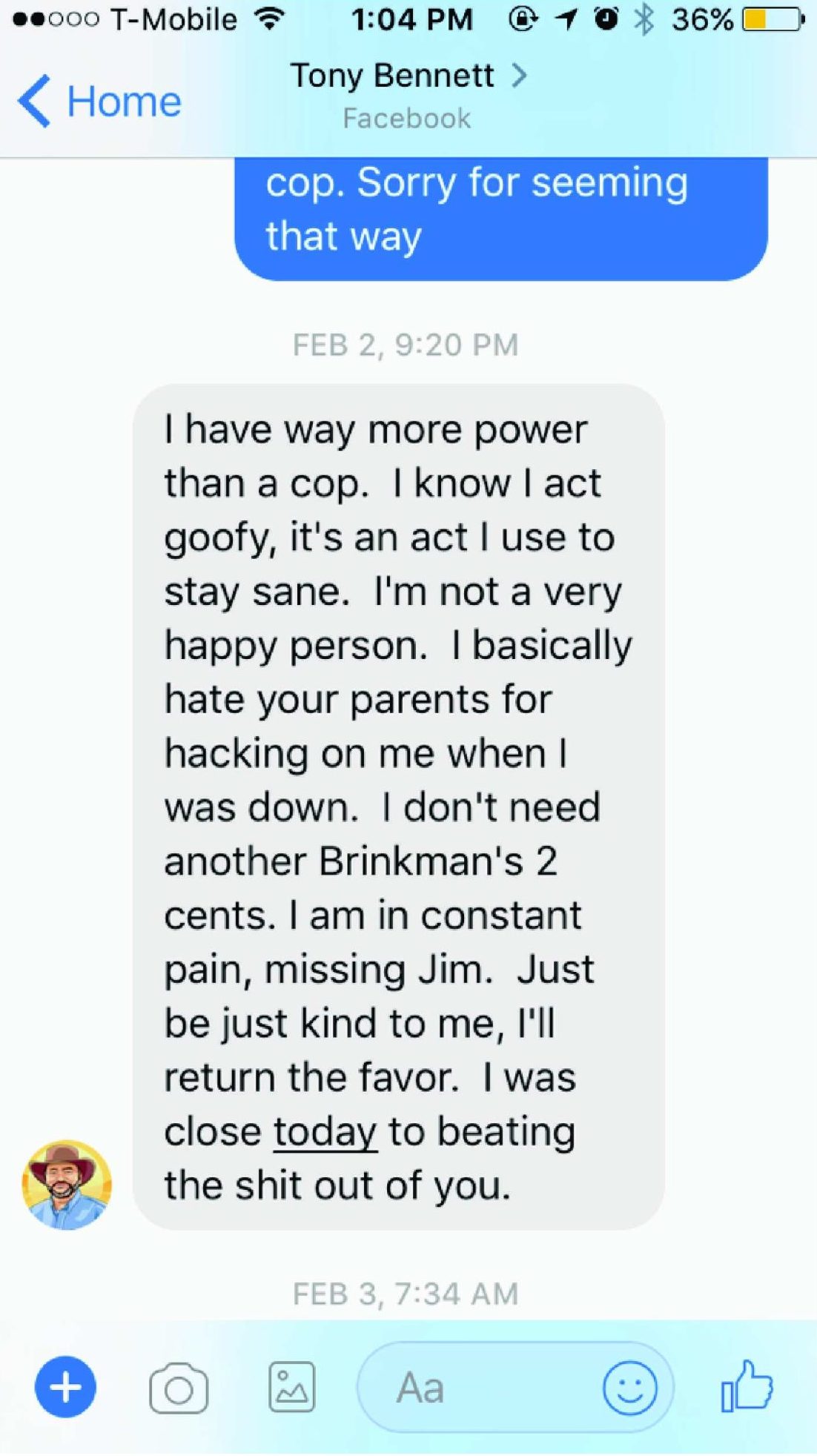
“More powerful than any cop”
During the hearing, text messages were introduced in which Bennett allegedly stated that he was “more powerful than any cop.” That statement was not disputed or explained away. It simply sat in the record — a former public official openly boasting about power over law enforcement.
The plaintiff alleged threats against employees and a culture of intimidation. The court did not rule on those allegations, but it also did not reject them. They remain part of the unrebutted record of what was raised under oath.
The Noah Kinney problem
Then there is Noah Kinney, Bennett’s co-owner at Cannalids.
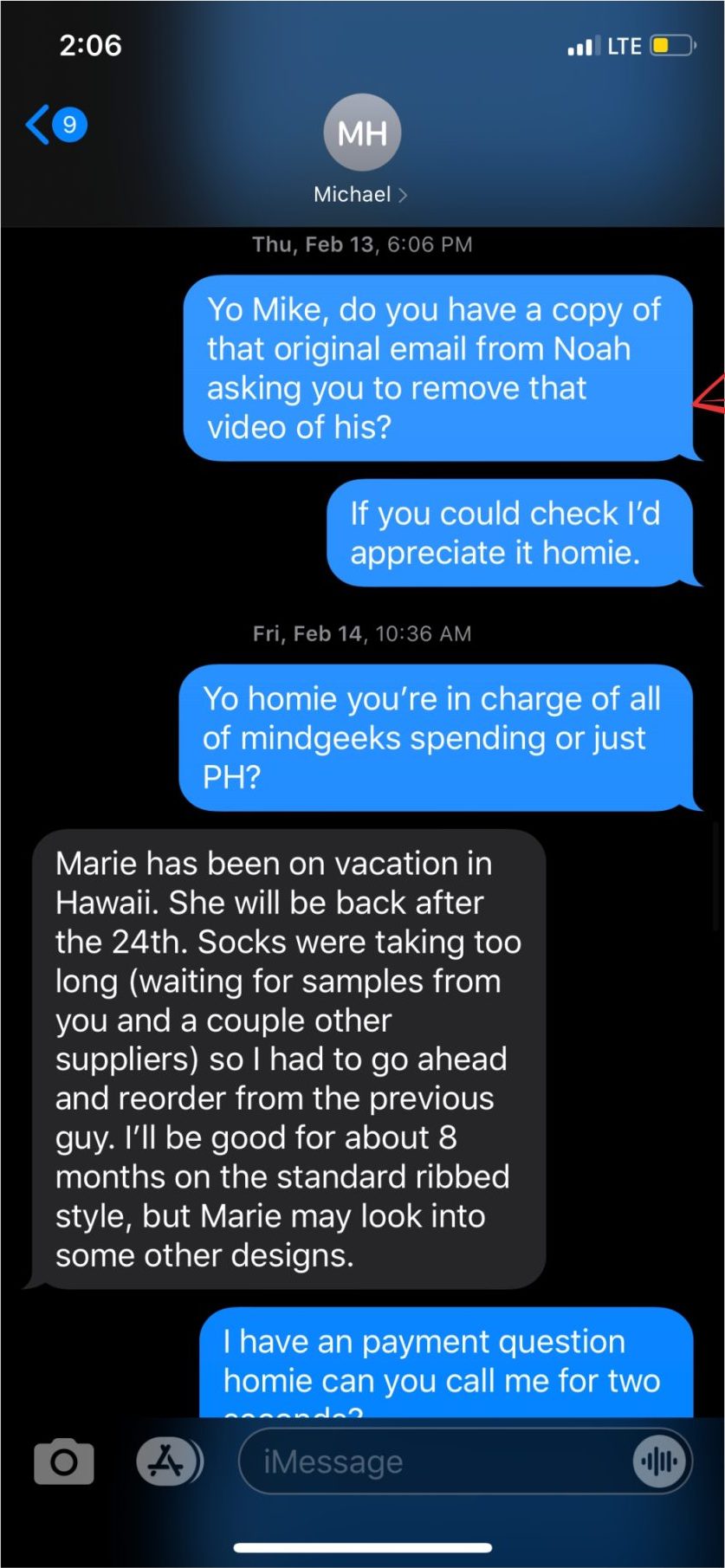
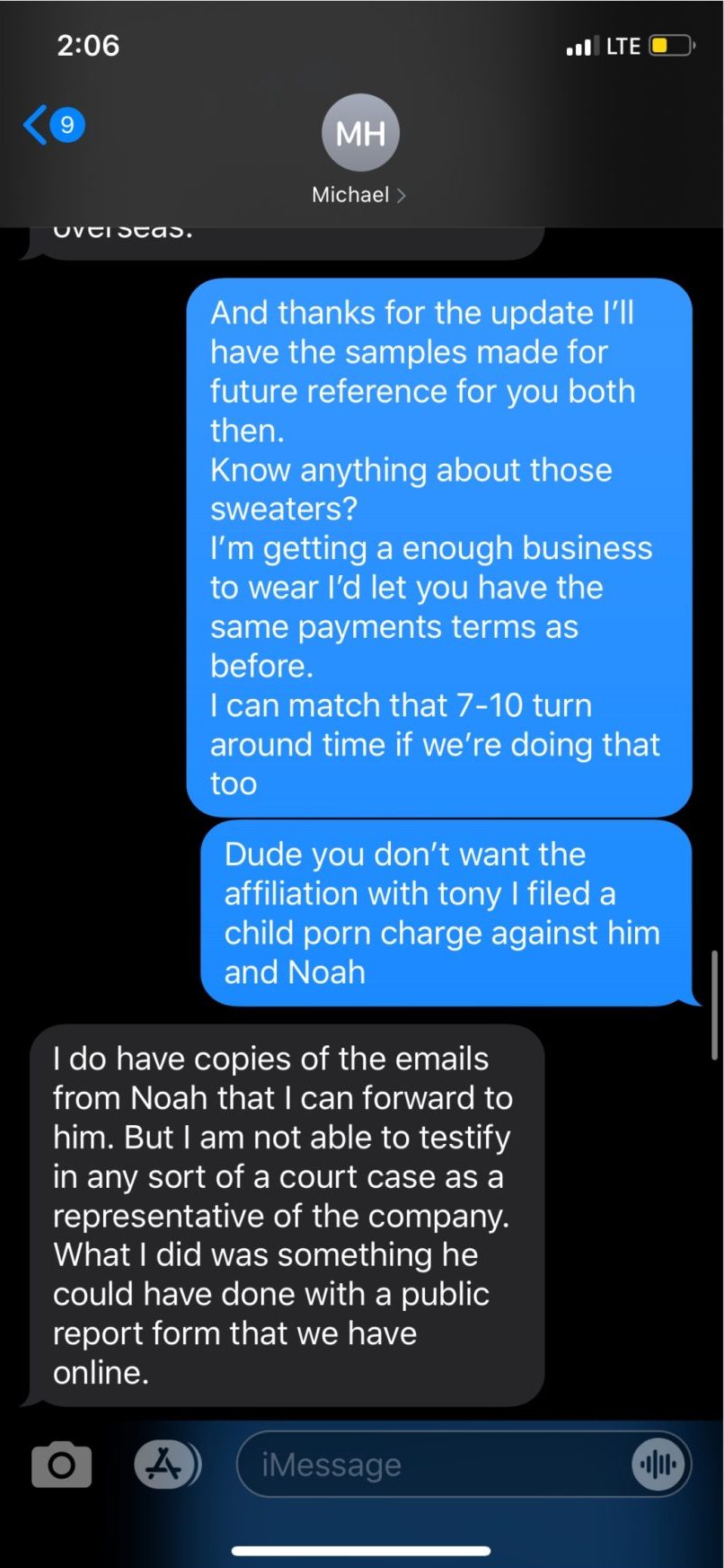
According to exhibits submitted in court, Kinney allegedly admitted to recording and uploading a sexually explicit video involving a minor without her knowledge. The plaintiff submitted text messages with Michael Hatt, a senior finance employee at MindGeek, presented as confirmation that the video existed and was later removed from Pornhub.
None of this was adjudicated in the wage-theft case — not because it was disproven, but because the court deemed it outside the narrow scope of the claim.
According to the plaintiff, when he threatened to report what he had learned to authorities, the wage deductions escalated.
That sequence matters.
Power protects itself
Bennett was represented by an attorney who also serves as city attorney for the City of Austin, in the same county Bennett once governed. The plaintiff moved to disqualify counsel. The court declined.
Legal? Perhaps.
Confidence-building? No.
Don’t confuse dismissal with innocence
Anthony Bennett and Noah Kinney did not prevail because they proved they did nothing wrong. They prevailed because a worker without a lawyer missed a technical step.
The court record shows:
-
The three-year statute for willful wage theft applied
-
The defense’s primary legal arguments failed
-
No judicial finding cleared the employer’s conduct
Dismissed on a technicality is not exoneration.
And it is certainly not accountability.
This column is opinion based on court records, sworn testimony, and admitted exhibits. Allegations are described as presented and were not adjudicated unless expressly stated.