
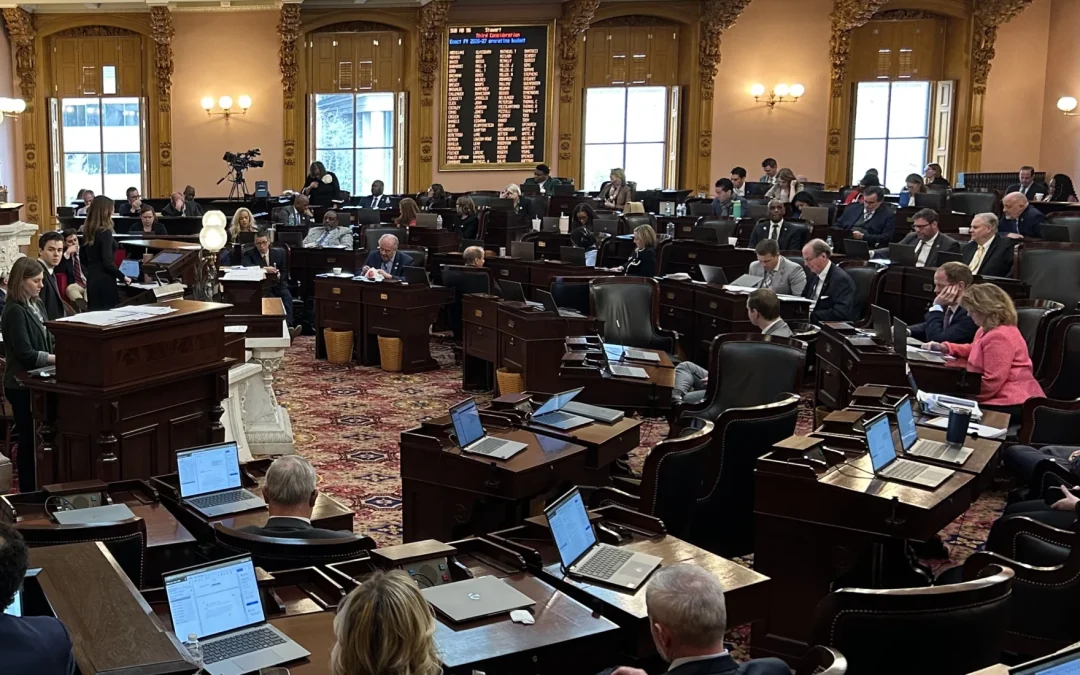
(Photo: Daniel Konik/Statehouse News Bureau)
Columbus, Ohio — April 9, 2025
The Ohio House of Representatives passed the state’s two‑year operating budget (House Bill 96) on April 9, 2025, including major provisions affecting K‑12 education, school choice, and governance. The budget, originally proposed by Governor Mike DeWine on February 3, 2025, sparked extensive debate among legislators, educators, and school boards across the Great Lakes region.
Budget Highlights
-
General K‑12 Funding: The House-approved budget increased K‑12 funding by approximately $226 million over current levels, though critics argue the allocation formula favors some districts over others.
-
School Choice Expansion: The bill included provisions to expand voucher programs and charter school funding, generating debate among public education advocates.
-
State Board of Education Restructuring: One of the most controversial measures eliminated the elected State Board of Education, replacing it with an appointed body, raising concerns about oversight and local accountability.
-
Mandated Categoricals (MCATs): Funding for programs such as special education, career-technical education, and transportation was preserved, though with adjustments that some districts considered restrictive. (iasb.com)
Legislative Timeline
-
February 3, 2025: Governor DeWine presented the budget proposal to the legislature, emphasizing funding priorities for public schools while expanding school choice programs. (wosu.org)
-
February 7, 2025: The Ohio House Finance Committee began hearings, with testimony from Ohio Department of Education officials, including Director Stephen Dackin, and representatives from school boards across the state. (ohiocapitaljournal.com)
-
April 9, 2025: Full House vote approved the budget with major education provisions. The bill then moved to the Ohio Senate for review. (wosu.org)
Regional Impact
The decisions made in Columbus affect not only Ohio districts such as Cleveland, Toledo, Akron, and Cincinnati, but also serve as a policy reference point for neighboring Great Lakes states like Michigan, Indiana, and Pennsylvania. Public school advocates warned that changes to funding formulas could create disparities between urban and rural districts, while supporters argued that the expanded school choice programs would offer families more options.
“Equitable funding and proper oversight are critical for Ohio students,” said Marisa Thompson, a representative for several local school boards. “The legislature’s actions will shape classrooms and district planning for years to come.”
Next Steps
The Ohio Senate is expected to review and amend the budget in spring 2025, with final approval and gubernatorial signing anticipated by late April to June 2025. Stakeholders, including educators, parents, and advocacy groups, are closely monitoring the process to ensure the final law addresses both funding and accountability concerns. (wvxu.org)