
(Photo: Mobilize)
Great Lakes Region — June–October 2025 — In what became one of the most widely felt protest movements of the year, the No Kings rallies rippled across the Great Lakes region in 2025, drawing thousands into the streets to oppose what demonstrators described as authoritarian trends in federal government policies. Millions participated nationwide, and the states bordering the Great Lakes — from Ohio to Michigan and up into northern Wisconsin and Minnesota — staged some of the region’s most visible and sustained demonstrations.
Origins & Regional Context
The No Kings protests began on June 14, 2025, a coordinated nationwide effort rejecting perceived overreach by the Trump administration — especially surrounding a military parade and federal deployments that coincided with the U.S. Army’s 250th anniversary and Trump’s birthday. Across the U.S., more than 2,000 demonstrations were scheduled that day in every state.
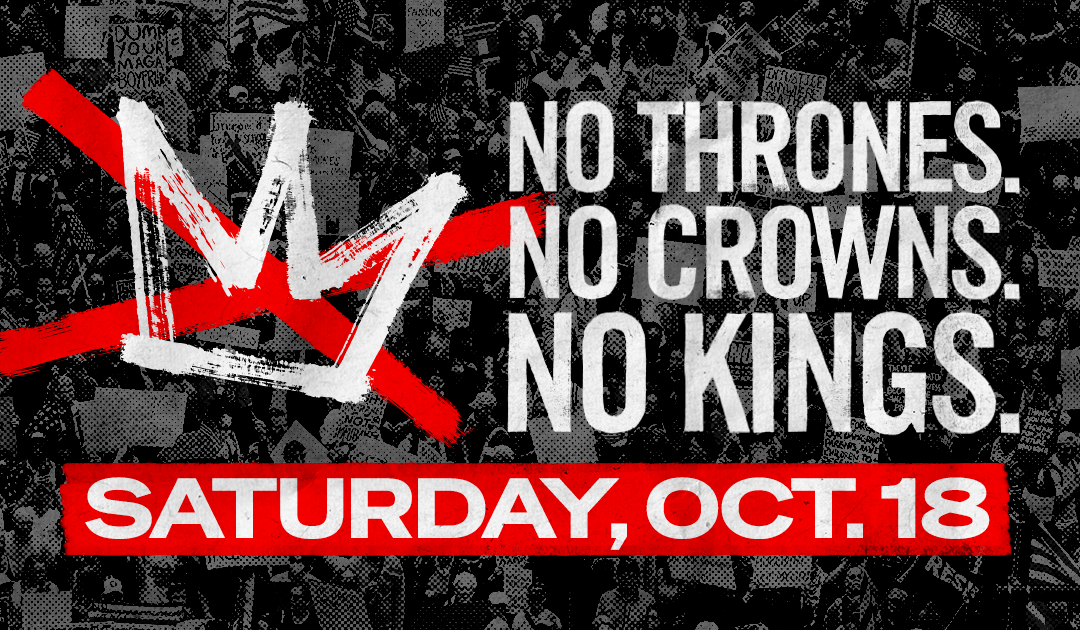
In the Great Lakes area, the demonstrations transformed from a single‑day event into a persistent, energized civic movement that included summer rallies, community organizes, and a second major day of action on October 18, 2025.
Michigan: From Detroit to the Upper Peninsula
Michigan was one of the most active states in the region:
-
In Detroit, demonstrators gathered at Clark Park before marching toward the Rosa Parks Federal Building, with thousands showing up to make their voices heard.
-
The suburbs weren’t silent either — in places like Ferndale, Livonia, Dearborn, Troy, and Novi, thousands of residents participated in local rallies that blended peaceful protest with community organizing.
-
Even northern Michigan cities like Traverse City saw roughly 7,000 protesters turn out to reject what they saw as erosion of civil liberties. Smaller communities such as Petoskey and Gaylord drew hundreds to localized marches.
Across the state, participants waved flags, carried signs against executive overreach, and underscored themes like civil rights, health care, and the preservation of democratic norms.
Ohio & the Finger Lakes Spillover
In Cleveland, one of the largest demonstrations in Northeast Ohio brought an estimated 5,000 people to downtown public squares before marching toward iconic civic landmarks. Organizers and civil rights leaders urged peaceful protest and remembrance of victims of political violence earlier that day — blending solemn reflection with energetic advocacy.
Across the western edge of the Great Lakes, Finger Lakes communities in New York joined the movement. Canandaigua and Seneca Falls saw hundreds take to the streets, expressing solidarity with the larger regional protests and reaffirming calls for accountability and democratic protection.
Smaller Towns and Sustained Activism
The No Kings movement wasn’t limited to big cities. Detroit Lakes, Minnesota, hosted around 400 participants in a rally at Veteran’s Memorial Park where activists combined protest with fundraising for a local food pantry.
In Benzie County, Michigan, approximately 1,000 locals joined a second No Kings rally on October 18, linking their regional event to national momentum and echoing protests in Chicago and elsewhere.
Finally, northern Michigan’s Marquette saw protests stretch for nearly a mile along US‑41 during the October demonstrations, with organizers also collecting food and supplies for local pantries — showing how the movement often blended activism with community support.
What It Meant for the Great Lakes
For the Great Lakes region, No Kings became more than a slogan: it was a series of ongoing, place‑based expressions of political sentiment and civic engagement. From Detroit and Lansing to Cleveland, Traverse City, and the Finger Lakes, residents faced debates over federal policy, civil liberties, and the very meaning of democratic participation.
The movement’s reach — from big urban rallies to community park marches — underlined how diverse populations in the region shared concerns about governance, autonomy, and political direction throughout 2025. While No Kings was controversial in some quarters, its local chapters across the Great Lakes helped keep the conversation in front of both residents and policymakers through sustained, visible civic action.