
(Photo: WBUR)
Minneapolis, MN — January 25, 2026
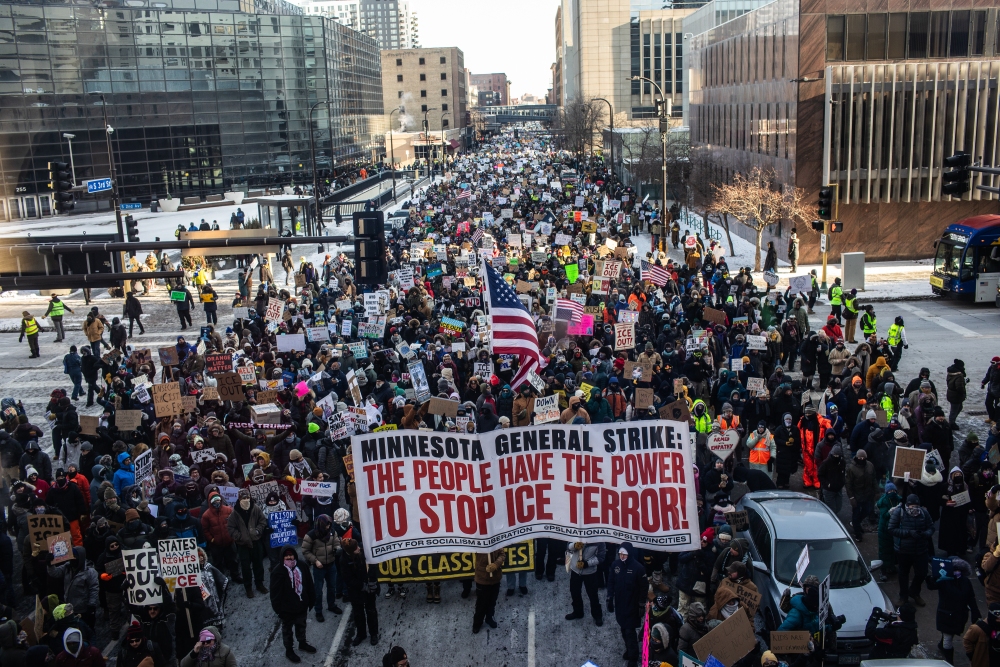
In what organizers are calling the largest general strike in Minnesota’s recent history, tens of thousands of workers across multiple sectors walked off the job on January 24, 2026, halting public transit, schools, healthcare services, and government offices in Minneapolis and Saint Paul. The strike was a coordinated response to growing tensions over federal immigration enforcement, rising community violence, and broader social grievances.
A Show of Solidarity Across Sectors
Union leaders reported participation from public transit employees, teachers, healthcare workers, sanitation staff, and other essential service providers. Marchers filled city streets with banners demanding an end to heavy-handed federal immigration operations, including the ongoing Operation Metro Surge by ICE and Border Patrol agents, which has already sparked protests and deadly encounters in the region.
“This is about our communities, our safety, and our rights,” said one organizer. “We cannot stand by while federal enforcement endangers everyday citizens and destabilizes neighborhoods.”
Impact on Daily Life
The strike caused widespread disruptions. Buses and light rail services were halted for much of the day, several schools closed, and non-emergency healthcare appointments were postponed. Residents reported long lines at grocery stores and temporary office closures, but many supported the action as a peaceful demonstration of civic power.
Local law enforcement largely maintained a low profile, focusing on traffic management rather than enforcement, though reports of small confrontations at key federal offices were noted.
A Response to Tragedy and Tension
The strike comes amid escalating tensions following the fatal shootings of Renee Good and Alex Pretti by federal agents in recent weeks. Community activists framed the walkout as both a memorial to those killed and a protest against aggressive federal enforcement tactics that critics say have disregarded civil liberties.
Experts note that the strike also reflects broader economic and social grievances, including wage disputes, worker protections, and demands for stronger local oversight over federal actions within city boundaries.
National and Cross-Border Attention
News of the strike spread quickly across the United States and into neighboring Canadian provinces, particularly Ontario, where many communities watch Great Lakes region labor and civic actions for potential ripple effects on cross-border migration, trade, and policy.
Analysts say the Minnesota strike could serve as a blueprint for coordinated civic and labor action in response to controversial federal policies, highlighting the power of mass mobilization to influence national debates.
Next Steps
Union leaders have indicated the strike could continue if federal authorities do not engage in dialogue with city and state leaders, though they emphasized the goal is peaceful, nonviolent protest. Organizers also plan a series of community forums to discuss broader social reforms and strategies to protect workers and residents from further harm.
For Minnesota and the wider Great Lakes region, January 24, 2026 may be remembered as a turning point — a day when ordinary citizens and workers exercised unprecedented collective power to demand accountability and safety in the face of federal enforcement operations.