
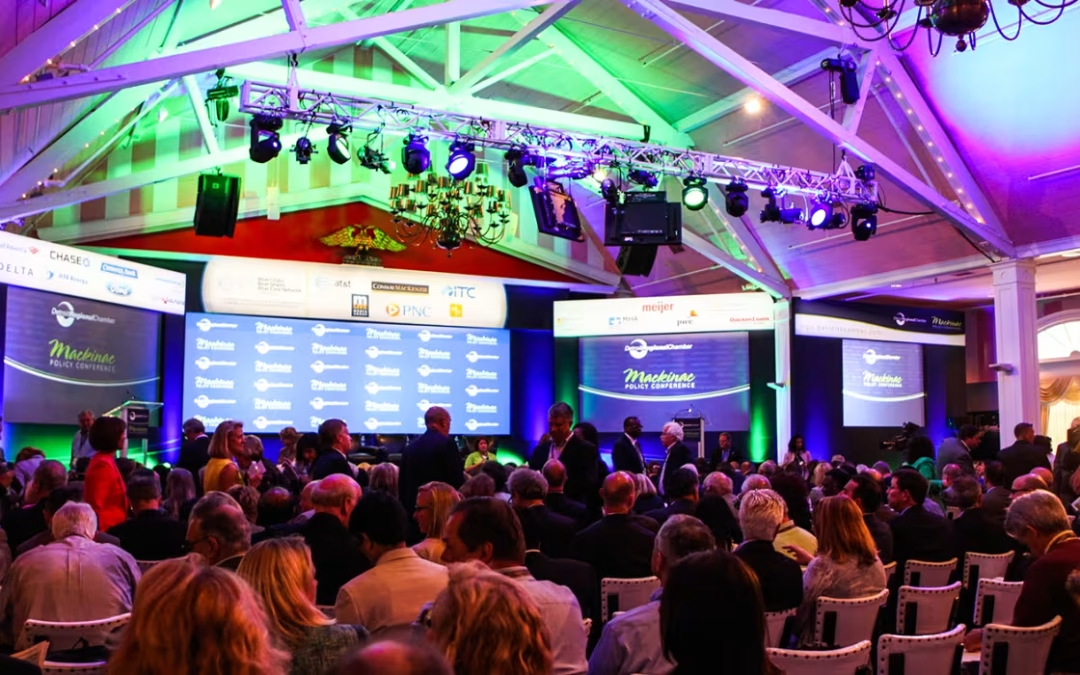
(Photo: Mackinac Island Policy Conference)
MACKINAC ISLAND, MI — May 28, 2026
The annual Mackinac Policy Conference opened this week at the Grand Hotel on Mackinac Island with business leaders warning that Michigan faces serious long-term economic challenges despite renewed investment in manufacturing and technology.
“This is not the happy part of the conference,” said Bob Riney, chief executive officer of Henry Ford Health and chair of the 2026 Mackinac Policy Conference, during opening remarks Tuesday. “This is gonna be recognize and own, we have a problem part of the conference.”
Riney and Detroit Regional Chamber President and CEO Sandy Baruah used the conference’s opening session to argue that Michigan has steadily lost ground in employment rankings, labor-force participation, population growth, and economic competitiveness over the last two decades.
“As Baruah puts it: Michigan’s house is on fire,” Michigan Advance reported during coverage of the conference. Baruah argued the state’s economic struggles are larger than partisan politics and require long-term cooperation between business and government leaders.
“This is a Michigan problem,” Baruah said during the conference. “And if anyone thinks this is a Democrat issue or a Republican issue, not only is that wrong, it’s also supremely unhelpful.”
Conference organizers said this year’s theme, “A Quest for Common Ground,” was designed to encourage bipartisan discussion about Michigan’s future economy, housing shortages, infrastructure modernization, and workforce development.
During another panel discussion focused on housing affordability, U.S. Sen. Elissa Slotkin said the country faces a major shortage in available housing units.
“Until we deal with that supply problem, we can have all the policies we want,” Slotkin said Tuesday during the Mackinac housing panel.
Throughout the conference, discussions repeatedly returned to artificial intelligence, advanced manufacturing, energy infrastructure, and population decline as major issues shaping the future of the Great Lakes economy.