
(Photo: Andrew Harnik/ Getty Images)
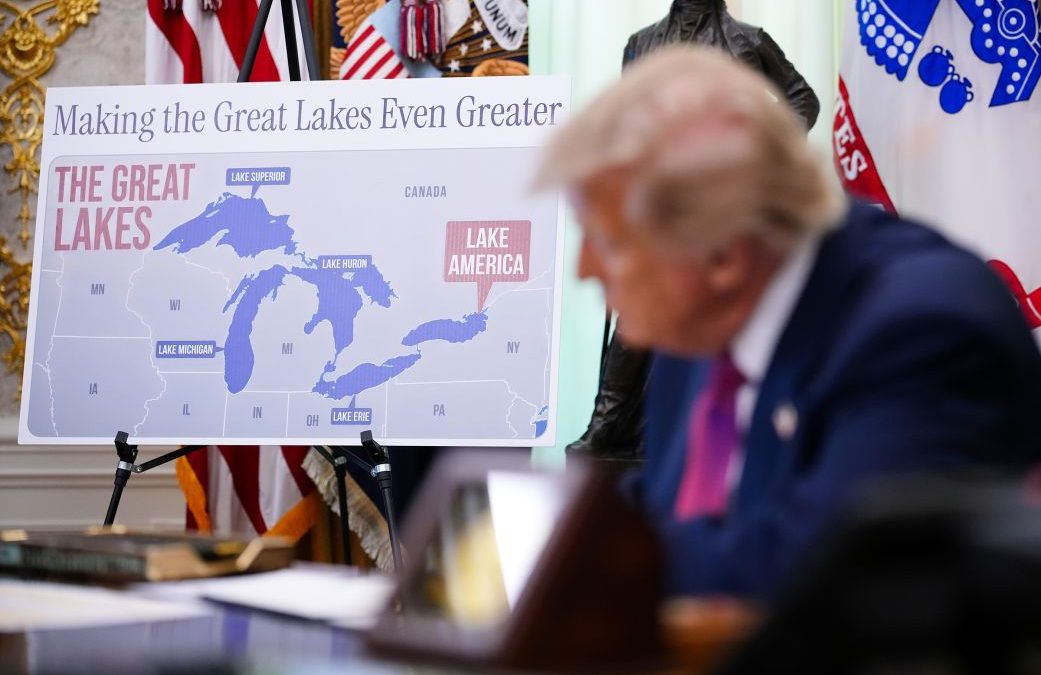
WASHINGTON, D.C. — August 28, 2026 — Lake Ontario has a new name—at least on the U.S. federal government’s maps. President Donald Trump signed an executive order Thursday directing the United States to rename the Great Lake “Lake America,” adding another symbolic flashpoint to an increasingly tense relationship between the United States and Canada.
The order directs the U.S. Department of the Interior to update the federal government’s geographic naming system to reflect the new designation. The change does not give the United States authority to rename Canada’s portion of the lake, meaning the waterway now faces a naming divide between the two countries.
Why Lake Ontario Is Now Lake America
Trump’s decision comes amid an escalating trade dispute between Washington and Ottawa. The United States has imposed tariffs on Canadian imports, while Canada has responded with tariffs of its own. Trump has repeatedly criticized Canada’s trade policies and used the lake’s name as another point of contention with the country’s leadership.
The renaming follows a pattern established earlier in Trump’s administration. In 2025, the president ordered the Gulf of Mexico to be referred to as the “Gulf of America” in U.S. federal usage. The Lake America order represents another attempt to use geographic naming as a symbol of American sovereignty and national identity.
Trump has also suggested that additional geographic names could potentially be changed, raising questions about how far the administration’s renaming campaign could go.
Canada Says Lake Ontario Is Still Lake Ontario
For Canada, however, the lake’s traditional name remains unchanged.
Canadian Prime Minister Mark Carney rejected the U.S. renaming, emphasizing that the name Lake Ontario predates both modern Canada and the United States. Canadian officials have said they will continue using the historical name.
The name itself has Indigenous roots. Critics of the American renaming have pointed to the history behind “Ontario,” arguing that replacing the name overlooks centuries of Indigenous and regional history associated with the Great Lake.
That means Americans and Canadians could soon be referring to the same body of water by two different official names depending on which side of the border they occupy.
A Great Lake Caught in a Political Dispute
Lake Ontario is the easternmost of the five Great Lakes and forms part of the international boundary between the United States and Canada. Its waters connect two countries whose economies, communities and environments are deeply intertwined.
The lake itself, of course, has not changed.
Its shoreline has not moved. Its waters remain shared. Ships will continue crossing it, communities will continue depending on it, and environmental challenges will continue to affect both sides of the border.
Only the name has changed.
That distinction is important because the executive order primarily affects U.S. federal usage. Canada is not required to recognize the new designation, and international naming conventions cannot simply be rewritten by one country’s government.
More Than a Name
Supporters can view “Lake America” as a declaration of American identity and sovereignty. Critics see the decision as a provocative gesture that risks turning geography into another battleground in the U.S.-Canada relationship.
For residents along the Great Lakes, the debate may feel less symbolic. The region depends on cooperation over water quality, shipping, environmental protection, fisheries and cross-border commerce.
Lake Ontario has existed through wars, treaties, political changes and the creation of modern nations.
Whether Americans ultimately call it Lake America or continue calling it Lake Ontario, the larger question may be what happens to the relationship between the two countries that share its waters.
For now, the lake has two names—and another chapter has been added to the increasingly complicated relationship between America and Canada.