
(Photo: LCA)
Great Lakes Region — May 21, 2026
The U.S.-flag Great Lakes shipping industry said the 2026 navigation season suffered significant disruptions after operators estimated that roughly one-third of available shipping time was lost due to ice conditions and limited icebreaking capacity.
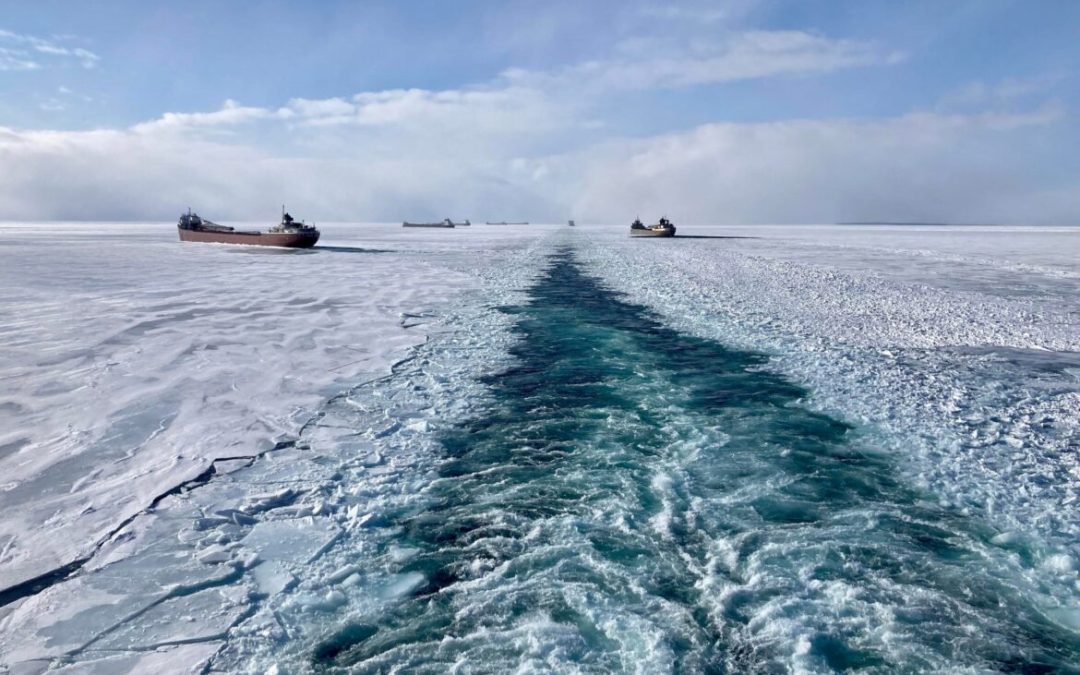
Industry reporting released by the Lake Carriers’ Association indicated that vessels across the system lost 82 ship days—about 1,953 operational hours—during the early portion of the season, as lingering ice delayed transits through key corridors including the St. Marys River and Whitefish Bay.
The disruptions were most concentrated near the Soo Locks, where vessels moving between Lake Superior and the lower Great Lakes experienced repeated congestion during peak ice conditions.
At multiple points early in the season, iron ore carriers were delayed for extended periods, slowing shipments into steel production facilities across the Midwest and creating bottlenecks in bulk commodity flow.
The Lake Carriers’ Association attributed the delays to insufficient icebreaking capacity, arguing that current resources are not keeping pace with commercial demand across a system that moves roughly 160 million tons of cargo annually.
The U.S. Coast Guard, which is responsible for icebreaking operations in the region, stated that its crews supported hundreds of vessel transits and maintained safe navigation conditions throughout the winter operational period.
Despite that, shipping operators argue that structural limitations in icebreaking capacity—not operational execution—are driving recurring early-season congestion.
The dispute has renewed calls for increased federal investment in Great Lakes maritime infrastructure, including expanded icebreaking fleets and improved maintenance funding for navigation channels.
Economists warn that repeated early-season delays could ripple through steel, automotive, and construction supply chains across both the United States and Canada.
The situation has intensified debate over whether current maritime infrastructure is sufficient for increasingly variable seasonal conditions on one of the world’s largest inland shipping systems.