
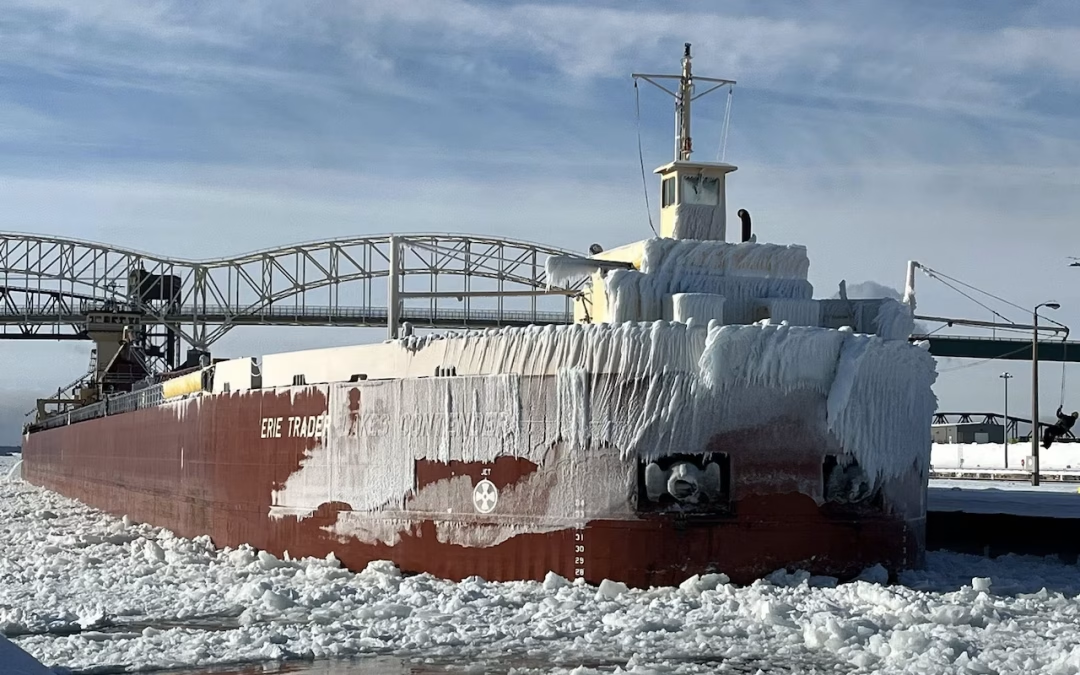
(Photo: U.S. Army Corps of Engineers)
Lansing, MI — January 27, 2026 — Michigan Governor Gretchen Whitmer today unveiled the state’s first‑ever Michigan Maritime Strategy, a 10‑year roadmap designed to strengthen the state’s maritime economy while safeguarding the Great Lakes, a natural resource that supports jobs, transportation, and tourism across the region.
The strategy, developed through a year‑long, stakeholder‑driven process led by the Michigan Department of Environment, Great Lakes, and Energy (EGLE) and supported by multiple state agencies, outlines a coordinated plan to modernize ports, expand maritime manufacturing, accelerate clean‑energy technologies, and grow the skilled workforce needed to sustain the sector’s long‑term success.
Economic and Environmental Goals
Michigan’s maritime sector already plays a major role in the state’s economy, supporting roughly 17,000 jobs and contributing about $3.3 billion annually, while water‑based tourism generates nearly $12 billion in economic activity and supports 45,000 jobs each year.
The strategy centers on six key goals for guiding policy, investment, and decision‑making over the next decade:
-
Modernize ports and invest in intermodal infrastructure.
-
Grow Michigan’s maritime manufacturing economy.
-
Accelerate adoption of low‑ and zero‑emission vessel technologies and fuels.
-
Lead the nation in maritime workforce recruitment, training, and retention.
-
Cultivate a thriving maritime innovation ecosystem.
-
Increase sustainability and resilience of recreation harbors and marinas.
Leadership Voices Highlight Dual Priorities
“Michigan is prepared to lead the future of maritime innovation while protecting the waters that define us,” Governor Whitmer said at the announcement. “This strategy will help create good‑paying local jobs and attract cutting‑edge investments while ensuring our Great Lakes — which hold 21 % of the world’s fresh surface water — remain a source of pride and prosperity for generations to come.”
Officials from across state government underscored the dual focus on economic development and environmental stewardship:
-
Phil Roos, Director of EGLE, said the strategy reflects a commitment to reduce pollution, modernize infrastructure, and expand competitive capacity in marine industries.
-
Scott Bowen, Director of the Michigan Department of Natural Resources, highlighted the importance of protecting coastal habitats, fisheries, and recreational opportunities.
-
Susan Corbin, Director of the Department of Labor and Economic Opportunity, emphasized aligning workforce training with the evolving needs of the maritime sector.
Other agency leaders noted the plan will help move Michigan‑grown products more efficiently to markets at home and abroad, strengthen supply chains, and support rural and agricultural communities connected to maritime logistics.
Collaborative Development and Next Steps
The strategy was shaped with input from more than 200 participants representing government, industry, business, community organizations, academia, and maritime stakeholders. Work such as interviews, site visits, and workshops helped ensure that the plan reflects both economic and environmental priorities across the state.
Before the strategy is formally adopted later in 2026, the public — including businesses, local governments, residents, and advocacy groups — can submit comments through February 27, 2026, allowing broader participation in shaping Michigan’s maritime future.
Why This Matters
Michigan’s maritime industry is vital to the broader Great Lakes economy — from heavy industry and freight transport to recreation and tourism. This strategy signals a coordinated, long‑term investment approach that ties economic development, workforce growth, clean energy innovation, and environmental stewardship into a single roadmap for the decade ahead.