
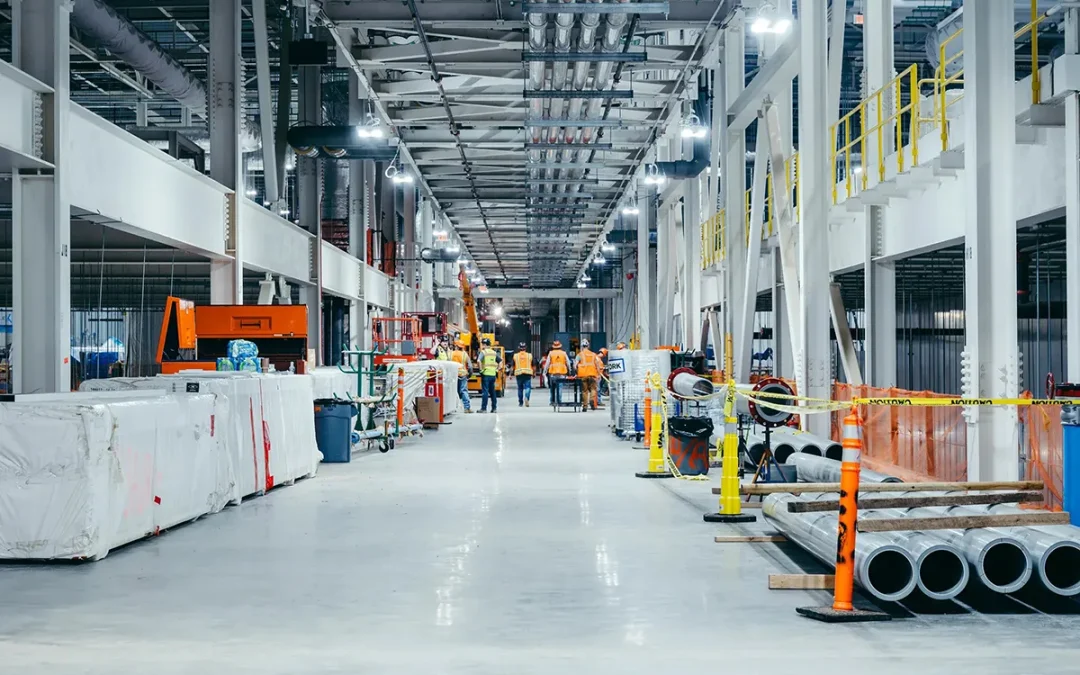
(Photo: Ford)
DEARBORN & MARSHALL, Mich. — December 20, 2025
Ford Motor Company continues construction of a major electric vehicle (EV) battery plant in Michigan even as the automaker recalibrates its broader EV production strategy amid changing market conditions and corporate priorities.
Battery Plant Progress in Marshall
The centerpiece of Ford’s Michigan investments is BlueOval Battery Park Michigan, a plant being built on a 500‑acre site in Marshall, Mich., on the MAJOR Campus. Ford originally announced a $3.5 billion investment in the facility, intended to manufacture lithium‑iron‑phosphate (LFP) battery cells for future Ford EVs.
Construction at the site is ongoing, and in December 2025 the company marked a major milestone with a topping‑out ceremony, celebrating the completion of the steel structure for the primary facility. The plant is expected to begin battery production in 2026.
BlueOval Battery Park Michigan will be among the first U.S. automaker‑backed LFP battery plants, and Ford reports the site will include about 1.8 million square feet of production space once complete. The LFP chemistry is prized for durability and cost effectiveness, and qualifying for U.S. tax incentives under the Inflation Reduction Act is a high priority for Ford’s sourcing strategy.
Jobs and Local Impact
Initial projections for the Marshall plant envisioned up to 2,500 jobs at full capacity. After scaling and optimization of the project, Ford now cites a target of about 1,700 manufacturing jobs directly linked to the battery park. Marshall’s local government is expected to receive more than $2 million in annual revenue once the facility is operational, and infrastructure spending is supporting ancillary businesses in the region.
Ford and local partners have also made community investments, from land acquisition and conservation easements along the Kalamazoo River to contributions for local schools, small‑business support programs and community projects.
Broader Shift in Ford’s EV Strategy
While the battery facility continues in Michigan, Ford’s overall EV product strategy has changed during 2025. In **mid‑December, Ford announced a large financial adjustment — a $19.5 billion writedown — and a shift away from some battery‑electric vehicle programs that had been central to its EV lineup. The company cited policy shifts, slower‑than‑expected EV demand and profitability challenges as factors behind strategic changes.
Several EV models previously in development were cancelled or deferred as Ford reprioritized its product mix to include hybrids, gas‑powered vehicles and more affordable EV offerings in response to market realities. This recalibration reflects ongoing industry challenges and shifts in consumer preferences.
Despite this broader market pivot, investments such as the Marshall battery plant remain a key part of Ford’s EV and electrified powertrain strategy — especially for models that will leverage the plant’s LFP battery production and take advantage of U.S. incentives for locally sourced components. Ford has also discussed relocating battery cell production previously done overseas to U.S. facilities — including Michigan — to better qualify for federal tax credits under the Inflation Reduction Act.
Regional and Supply Chain Implications
The Marshall battery plant is part of a wider effort to establish a domestic EV supply chain that supports not only Ford’s vehicles but also U.S. energy and manufacturing competitiveness. The investment dovetails with other battery manufacturing projects in Michigan and the Midwest, even as the pace of hiring remains modest compared with original projections.
State and local officials see the plant as a long‑term economic anchor, while workforce development programs in west Michigan and beyond are gearing up to provide training for battery and EV‑related manufacturing roles as production nears.
Looking Ahead
Ford’s investment in the BlueOval Battery Park Michigan underscores the ongoing importance of the Great Lakes region in the national transition toward electrified vehicles — even as the company adjusts its broader EV product roadmap. With production targeted for 2026 and continued support from federal tax incentives, the Marshall facility is poised to play a central role in Ford’s evolving electrification plans.