
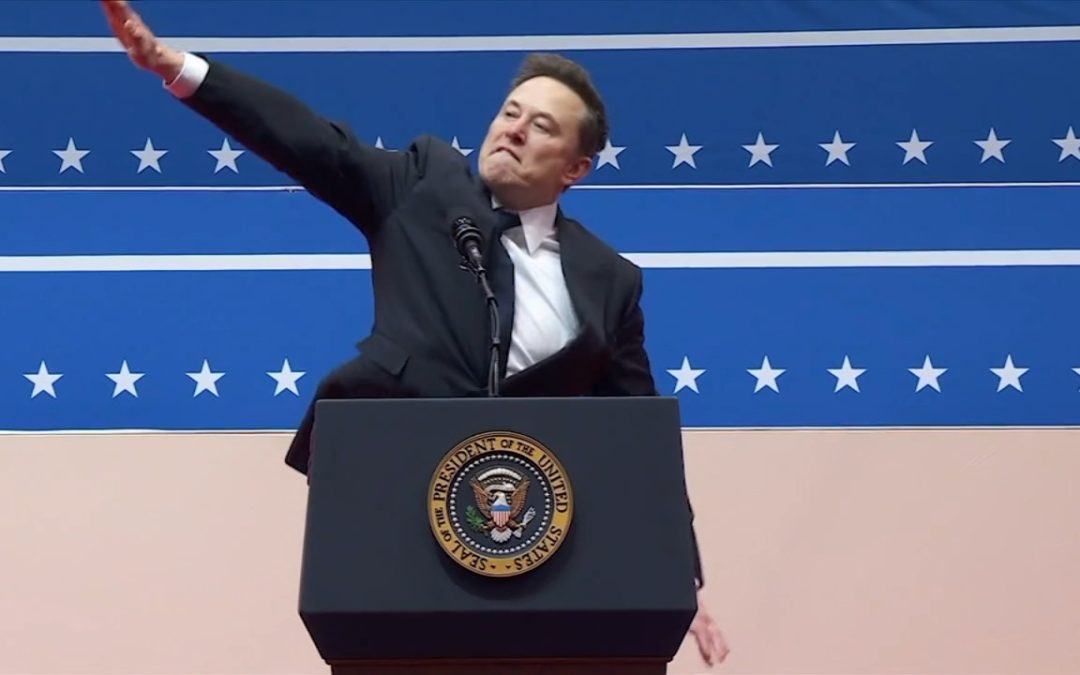
(Photo: Social Media)
NEW YORK — October 12, 2026 — Elon Musk has emerged as the largest known donor in the 2026 midterm elections, directing more than $276 million toward Republican political efforts since July as the party fights to maintain its majorities in Congress. The scale of the spending raises questions about the growing influence of billionaire wealth in American politics, particularly when donors have substantial business interests that intersect with federal government decisions.
The contributions, confirmed by a spokesperson for Musk’s political operation and reported ahead of federal campaign finance filing deadlines, represent a significant return to electoral spending for the world’s richest man. Musk had previously indicated that he intended to reduce his political contributions following his high-profile involvement in the 2024 presidential election and his subsequent falling-out with President Donald Trump.
His latest spending suggests that retreat was temporary.
The money is being directed through several political organizations, including super PACs supporting Republican Senate and House candidates. The contributions arrive at a consequential moment for the Republican Party, which is defending its congressional majorities amid voter concerns about inflation, the economy and the administration’s performance.
For Musk, the stakes extend beyond party politics. His companies operate in industries where federal contracts, regulatory decisions and government policy can have enormous financial consequences.
Where the $276 Million Is Going
Musk’s contributions are spread across several organizations working to elect Republicans and maintain the party’s congressional majorities.
The largest disclosed contribution is $158 million to the Senate Leadership Fund, a super PAC focused on electing Republican senators. Musk also directed more than $76 million to America PAC, the political organization he established to support Republican electoral efforts.
Additional contributions include $20 million to the Congressional Leadership Fund, which supports Republican House candidates; $10 million to Lone Star Liberty PAC, which supports Texas Republican Senate candidate Ken Paxton; $10 million to the Republican Governors Association; and $2 million to the Republican Attorneys General Association.
The distribution illustrates how large political contributions can influence elections without being paid directly to individual candidates. Super PACs can raise and spend unlimited sums independently of candidates’ campaigns, although they cannot legally coordinate their independent expenditures with those campaigns.
Such organizations can finance advertising, voter outreach and other political activities on a scale that individual campaigns may struggle to match.
Musk’s contributions give Republican-aligned organizations substantial resources during the final weeks before the November election. The spending does not guarantee electoral success, but it gives those organizations greater capacity to communicate with voters and compete in expensive races.
A Return to Politics After Promising to Pull Back
Musk’s renewed spending marks a notable change from his earlier statements about reducing his political involvement.
During the 2024 election cycle, he became one of Trump’s most prominent financial supporters, spending hundreds of millions of dollars to support the Republican presidential campaign and allied political organizations. He subsequently took a role in the administration’s Department of Government Efficiency initiative, which sought to reduce federal spending and reshape government operations.
His relationship with Trump later deteriorated publicly, leading to a period of political tension between the two men.
Musk’s latest contributions indicate that his commitment to Republican electoral efforts has not diminished in the way his earlier comments suggested it might. His total political spending during the 2025–2026 election cycle has now reached approximately $366 million, according to reporting based on campaign finance records.
The development also coincides with a renewed rapprochement between Musk and Trump. On October 8, Trump presented Musk with the National Medal of Science at an event in Washington.
Their political relationship has therefore returned to prominence at the same time that Musk is committing substantial resources to the Republican Party’s effort to retain control of Congress.
The Influence of Billionaire Wealth
Musk’s spending highlights a central tension in American campaign finance: elections are formally decided by voters, but the resources available to communicate political messages are distributed very unevenly.
Candidates need money to advertise, organize volunteers, contact voters and respond to attacks from opponents. Outside organizations can spend enormous sums supporting candidates or criticizing their rivals, allowing wealthy individuals to play an outsized role in determining which political messages receive attention.
Musk’s contributions are particularly notable because of their scale. A single donor has directed hundreds of millions of dollars into one election cycle, giving Republican-aligned organizations access to financial resources comparable to those of major political institutions.
Supporters of large political donations argue that individuals should be free to participate in politics by supporting candidates and causes they believe in. They also point out that campaign spending can communicate policy positions and encourage voter participation.
Critics counter that extreme concentrations of political wealth create an imbalance in representation. Ordinary voters may have equal rights at the ballot box, but they do not possess anything close to the same capacity to shape political advertising or fund nationwide campaigns.
The concern is not that a wealthy donor automatically determines an election’s outcome. It is that substantial financial resources can influence the environment in which voters make their decisions.
When Business Interests Meet Political Power
Musk’s political involvement raises additional questions because of his business interests.
SpaceX relies on federal contracts and works closely with government agencies, while Musk’s other business ventures operate in sectors shaped by federal regulation and public policy. His previous role in the Trump administration also placed him unusually close to decisions affecting the federal government.
That overlap makes scrutiny of his political spending particularly important.
Large political donations do not, on their own, establish corruption or prove that a donor has received favorable treatment. Nor does supporting a political party demonstrate that a donor expects a specific government action in return.
Nevertheless, when an individual with substantial government business interests also becomes one of the country’s largest political donors, transparency and public oversight become especially important.
Voters have a legitimate interest in understanding who finances political organizations, which candidates those organizations support and whether the interests of major donors overlap with decisions made by elected officials.
The relevant question is not simply whether Musk is legally entitled to spend his money on politics. He is. It is whether the current campaign finance system provides adequate safeguards against undue influence when private wealth reaches this scale.
Can Money Determine the Midterms?
Musk’s contributions arrive as Republicans seek to defend their majorities in both chambers of Congress. Democrats are hoping to capitalize on dissatisfaction with the administration and economic concerns among voters.
Republican-aligned organizations can use the additional resources to purchase advertising, expand outreach and support candidates in competitive races. That spending may prove particularly consequential in states where campaigns are separated by narrow margins and political advertising is expensive.
But money is only one factor in an election. Candidate quality, local issues, voter turnout, national political conditions and the public’s assessment of the parties all influence the outcome.
It would therefore be premature to conclude that Musk’s spending will preserve Republican control of Congress. The donations increase the financial resources available to Republican political organizations, but voters will ultimately decide the races.
The more immediate question is what the scale of the spending reveals about the role of wealth in American electoral politics.
Democracy and the Price of Political Influence
Musk’s $276 million contribution spree is more than a story about one billionaire’s political preferences. It is a reminder of how the American campaign finance system allows a small number of exceptionally wealthy individuals to deploy enormous resources in support of their preferred political outcomes.
The spending is legal under the existing framework, and Musk is entitled to advocate for candidates and policies he supports. But legality does not eliminate the broader debate over whether such concentrations of financial influence are healthy for democratic representation.
A system in which voters cast equal ballots can still produce an unequal political environment when some individuals possess vastly greater resources to shape the choices presented to those voters.
The question facing the country is not whether wealthy Americans should be permitted to participate in politics. It is how to ensure that their financial power does not overwhelm the voices of ordinary citizens.
As the November midterms approach, Musk’s spending will provide Republican candidates and political organizations with substantial resources. Whether those resources translate into electoral victories remains uncertain.
What is already clear is that one individual’s financial decisions have become a major force in the campaign for control of Congress.
In a democracy, money can help determine which arguments voters hear. The responsibility of voters, journalists and public institutions is to ensure that the amount spent promoting an argument is never mistaken for the strength of the argument itself.