
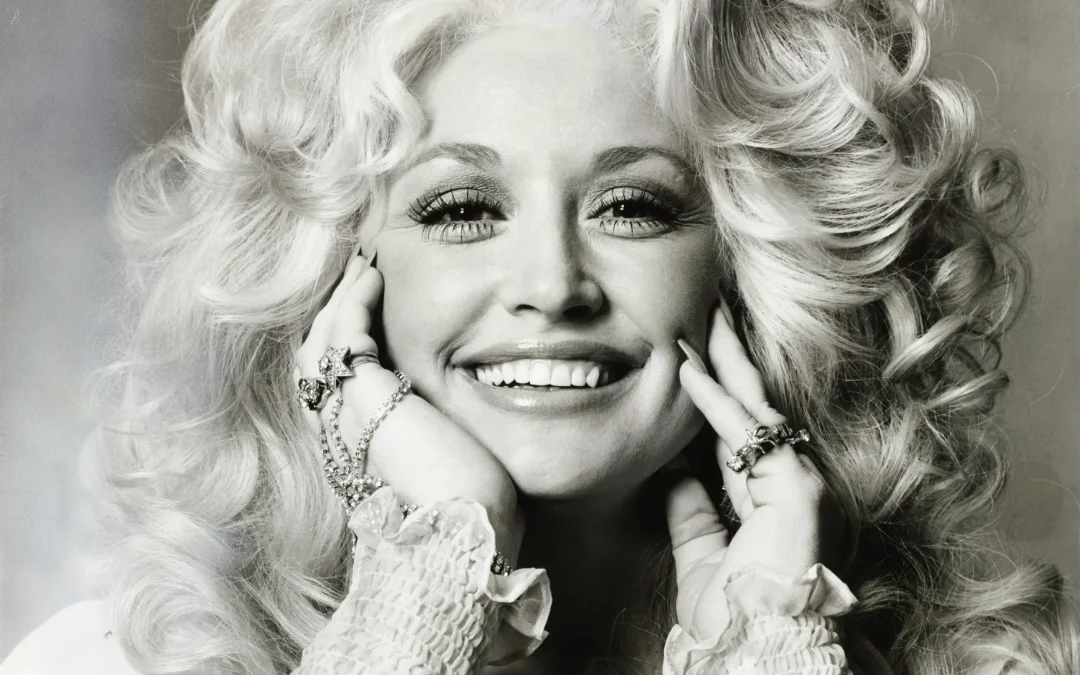
(Photo: Irving Penn / © Condé Nast)
NASHVILLE, Tennessee — September 1, 2026 — Dolly Parton spent decades cultivating an image that could appeal to almost anyone. With her rhinestone outfits, self-deprecating humor, unmistakable voice and carefully measured public statements, she became one of the rare entertainers who could command affection across America’s increasingly divided political landscape. Following her death at 80 on August 25, however, it is worth examining a contradiction at the center of her public life: Parton often insisted that she stayed out of politics, yet her music, philanthropy and public positions were deeply connected to some of the most important political and social debates of her time.
Parton’s death has prompted tributes celebrating her songwriting, generosity and ability to unite audiences who disagree about almost everything else. Those tributes are deserved. But the tendency to portray her as simply a universally beloved entertainer risks overlooking what made her influence so significant. Parton did not need to campaign for politicians or turn every interview into a political argument to have an impact on the world around her.
She understood that public influence could extend beyond party labels. Her work addressed the exploitation of working women, her charitable efforts expanded access to children’s books, and her public statements repeatedly emphasized dignity and acceptance for people marginalized by society.
Parton may have preferred not to call herself political. That does not mean her life was separate from politics.
The Politics Behind ‘9 to 5’
Few examples illustrate Parton’s political influence more clearly than 9 to 5, the 1980 film in which she starred alongside Jane Fonda and Lily Tomlin.
The story follows three women working under a sexist, abusive boss who exploits his employees while benefiting from a workplace culture that limits their opportunities. The women eventually turn against him, transforming their personal grievances into a collective effort to change their working conditions.
Parton also wrote and performed the film’s title song, which became an enduring anthem about workplace inequality and the frustrations of employees whose labour benefits those above them.
The message was unmistakably connected to real political questions: who holds power at work, who receives fair compensation, and why are women expected to tolerate treatment that would be unacceptable in a more equal workplace?
These were not abstract concerns. Women were fighting for greater economic independence, equal opportunities and recognition of workplace discrimination. Parton’s contribution helped bring those frustrations to audiences who might never have attended a political rally or read a feminist essay.
The significance of 9 to 5 was not diminished because Parton preferred humour and entertainment to political speeches. If anything, her ability to make a serious subject accessible helped the film reach a broader audience.
Parton did not have to stand at a podium and announce herself as a feminist to participate in a cultural conversation about women’s rights.
Her work spoke for itself.
She Avoided Political Labels, Not Every Political Issue
Parton was unusually skilled at navigating the American entertainment industry’s political divisions.
In a 2019 interview connected to the podcast Dolly Parton’s America, she explained that she avoided politics because she had fans on both sides of the political spectrum. She understood that explicitly aligning herself with one party could alienate people who loved her music.
That approach was strategic, but it was also consistent with her desire to remain accessible to people from different backgrounds.
Parton did not want her audience divided into competing political camps. She wanted people to enjoy her music, share her stories and find common ground.
Yet her reluctance to embrace political labels sometimes obscured the substance of her views.
She supported equal opportunity for women, defended LGBTQ+ people, and spoke about the importance of treating others with dignity. Her public image was built around generosity and acceptance, values that inevitably intersect with political arguments over equality, discrimination and the responsibilities of institutions.
Parton could avoid endorsing a presidential candidate while still taking positions that challenged discrimination and social exclusion.
Those are not contradictory actions. They demonstrate that politics is larger than elections and party affiliation.
A person does not become apolitical simply by declining to identify with a political party. Nor does every compassionate act need to be assigned to one side of the political spectrum.
But it is equally misleading to pretend that decisions about equality, education, workers’ rights and the treatment of minorities have no political significance.
Parton’s career demonstrates precisely why that distinction matters.
A Feminist Without the Label
Parton also resisted being defined as a feminist, despite the obvious connections between her career and the movement for women’s equality.
In interviews, she explained that she preferred to demonstrate her beliefs through the way she lived rather than adopt a label that she felt carried unnecessary political baggage.
Her life offered a powerful example of independence. She built a business empire, retained control over much of her songwriting and publishing, and established herself in an industry in which women frequently faced unequal treatment.
Her songs also addressed gendered double standards. In Just Because I’m a Woman, released in 1968, Parton challenged the judgment women faced over their sexual histories, questioning why men and women were held to different expectations.
That message remains relevant in a culture where women’s behaviour is frequently subjected to scrutiny that men do not experience to the same degree.
Parton’s career did not follow a conventional political script. She embraced an exaggerated, glamorous appearance that some observers initially dismissed, then used that image to build an extraordinary professional life on her own terms.
She was a songwriter, performer, businesswoman and philanthropist who demonstrated that femininity did not have to mean submission.
Her reluctance to claim the feminist label did not erase the feminist significance of her achievements.
It instead revealed how political ideas can influence culture even when the people advancing them resist the labels others attach to their work.
Her Support for LGBTQ+ People Was Not Politically Neutral
Parton’s relationship with LGBTQ+ audiences offers another example of how her carefully managed public image coexisted with positions that carried real social significance.
For decades, she was embraced by LGBTQ+ fans who saw in her music, humour and public persona a message of acceptance. She spoke in support of gay people and same-sex relationships and became an important figure for audiences who did not always feel welcome in traditional country music spaces.
Her message was not built around partisan confrontation. She generally emphasized compassion, respect and the idea that people should be allowed to live their lives without being condemned for who they are.
But those principles have consequences in a country where LGBTQ+ rights have been at the centre of fierce political disputes.
When public figures defend people targeted by discrimination, their words can provide reassurance to those affected and challenge the attitudes that sustain exclusion.
Parton understood that she could communicate those values without turning every appearance into an argument over legislation or political parties.
Her appeal across ideological boundaries made that influence particularly notable. She could reach people who might reject a message if it arrived through the language of partisan politics, but listen when it came from an entertainer they had loved for decades.
That does not mean every admirer agreed with her views. Nor does it mean Parton consistently took the strongest possible position on every issue affecting LGBTQ+ people.
It means her public commitment to acceptance was consequential, even when she avoided the language of political activism.
Charity Is Not a Substitute for Politics, but It Can Change Lives
Parton’s philanthropy was another defining part of her legacy.
Through the Imagination Library, she helped establish a program that provides free books to children, encouraging early literacy and expanding access to reading materials regardless of family income.
The initiative grew from a personal connection to her father, who had limited educational opportunities. Parton transformed that experience into a project that eventually reached children far beyond her native Tennessee.
The program addresses a practical problem: children from lower-income households may have fewer books at home and less access to resources that support early learning.
Providing books does not solve every inequality affecting education. It does, however, offer children a resource that can support literacy and learning, while encouraging families to make reading part of everyday life.
Parton’s work raises a broader question about the relationship between charity and public policy.
Charitable programs can make an immediate difference, but they do not eliminate the need for institutions and governments to address the structural reasons some families have fewer opportunities than others.
Parton rarely presented her philanthropy as a substitute for political action. Instead, she concentrated on an area where she could use her wealth, reputation and organizational influence to make a measurable contribution.
Her example shows that meaningful social change can come from many directions. It can emerge through legislation, public advocacy, cultural influence and private initiatives that improve people’s lives.
The political significance of her work does not depend on whether she described it that way.
Why Her Public Image Mattered
Parton’s ability to avoid becoming a divisive political figure was not accidental.
She understood her audience, protected her privacy and chose her words carefully. She could make a joke rather than engage in a confrontation, redirect an uncomfortable question or emphasize a value that people across political lines could recognize.
That professionalism helped sustain a career spanning generations.
It also meant that her public statements were often less confrontational than those of entertainers who made direct political opposition part of their identity.
There is a legitimate argument that her approach allowed her to preserve a rare cultural space in which people with different political beliefs could find common ground.
But there is a danger in interpreting that ability as evidence that she stood outside the political and social struggles of her time.
A person can avoid partisan conflict while still supporting causes that challenge existing power structures. A person can value civility without treating every political position as equally compatible with equality and human dignity.
Parton’s career embodied that tension.
She did not consistently tell audiences which political party to support. Instead, she built a body of work that celebrated working people, challenged sexist double standards and emphasized compassion for people who were often treated as outsiders.
Her influence was not neutral simply because she was careful.
Dolly Parton’s Legacy Deserves More Than Nostalgia
Parton’s death has understandably inspired an outpouring of affection. Her songs remain woven into American popular culture, her business achievements are remarkable, and her philanthropy has helped millions of children.
But remembering her only as a figure who united everyone risks simplifying the very qualities that made her extraordinary.
Parton was a sophisticated public figure who understood the difference between having influence and constantly announcing it. She recognized that a celebrity’s words could divide an audience, and she often chose to communicate through humour, music and charitable work instead.
That restraint was part of her success. It should not become a reason to ignore the substance of what she did.
Her work in 9 to 5 addressed the exploitation of women in the workplace. Her songwriting challenged gendered expectations. Her support for LGBTQ+ people offered reassurance to audiences who faced discrimination. Her literacy initiative sought to expand opportunities for children regardless of their circumstances.
These were not merely pleasant gestures detached from the world around her. They intersected with debates about economic power, gender equality, discrimination and access to education.
Parton may not have wanted to be remembered as a political activist, and it would be inaccurate to portray her as a conventional partisan figure. She was more complicated than that.
She was a businesswoman who protected her independence, an entertainer who understood her audience and a philanthropist who turned personal experience into a lasting public initiative.
She also demonstrated that it is possible to hold values with political implications without allowing party loyalty to define an entire public identity.
The lesson of her life is not that politics can be avoided. It is that political influence often operates beyond the boundaries of elections, party platforms and televised arguments.
Dolly Parton knew how to speak to America without demanding that America agree on everything.
But the issues her work addressed were never apolitical. They concerned who deserves opportunity, who should be treated with dignity and whether society can do more for people who have been overlooked.
Her death leaves behind an extraordinary cultural legacy. Understanding that legacy requires recognizing not only the entertainer who made millions laugh and sing, but also the woman whose work quietly challenged the world around her.
Dolly Parton did not need to call herself political to have political influence. Her life had already made the argument.