
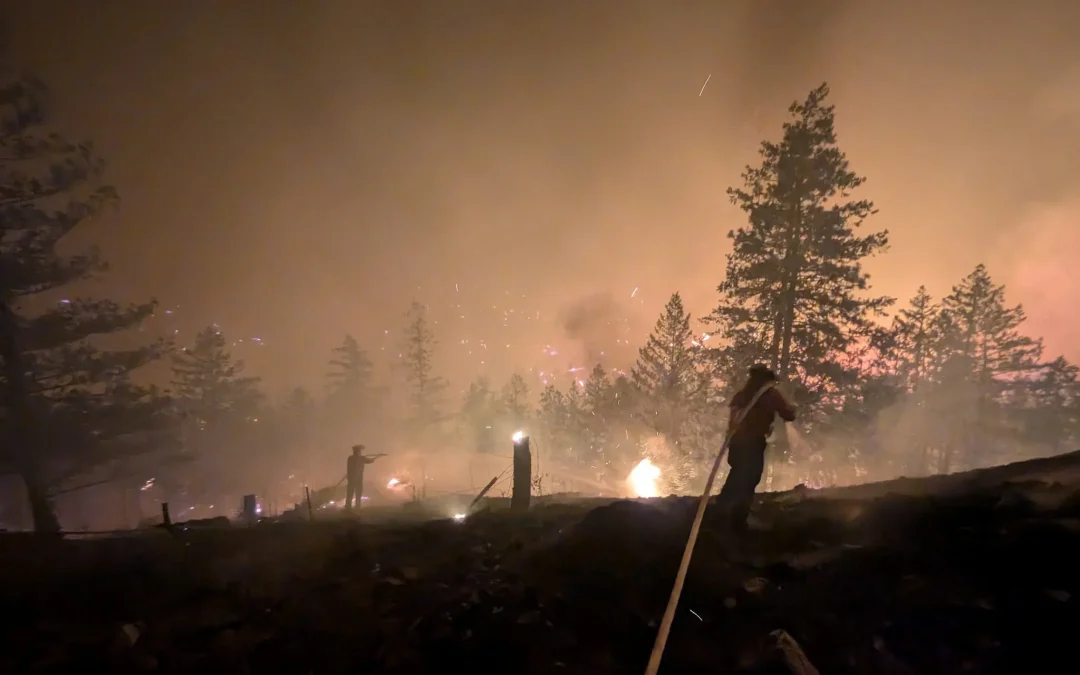
(Photo: Retuers)
DETROIT, Michigan — July 16, 2026 — Smoke from massive wildfires burning across Canada and northern Minnesota blanketed communities throughout the Great Lakes region Thursday, turning skies hazy and orange while sending air-quality levels into unhealthy and hazardous territory across parts of the Midwest.
The thick smoke, carried south by shifting winds, affected communities on both sides of the U.S.-Canada border. Michigan, Minnesota, Wisconsin, Illinois and Ohio were among the states dealing with deteriorating air quality as smoke from fires in Ontario and Minnesota settled close to the ground.
In Detroit, the smoke became particularly severe. Visibility was reduced in some areas, and air-quality conditions ranked among the worst recorded in major cities around the world that day.
Smoke Crosses the Great Lakes
The wildfire crisis demonstrates how quickly environmental emergencies can cross the international boundary separating the United States and Canada.
Fires burning in western and northern Ontario were sending smoke southward toward the Great Lakes, while fires in northern Minnesota added another source of smoke to the region.
Michigan officials issued a statewide air-quality alert as forecasters warned that shifting winds would push smoke farther south from the northern Great Lakes into the Lower Peninsula.
Communities near Lake Superior were expected to experience the smoke first before conditions spread toward southern Michigan and potentially toward the Michigan-Indiana border.
The result was a dramatic change in conditions for residents who woke up to smoky skies, reduced visibility and warnings to limit time outdoors.
Chicago and Detroit Among Communities Affected
The effects were visible far beyond rural areas.
In Chicago, wildfire smoke obscured parts of the skyline and produced air-quality readings ranging from very unhealthy to hazardous.
Detroit residents also found themselves confronting an unusual summer atmosphere as smoke settled over the city. Officials warned that fine particles contained in wildfire smoke can penetrate deep into the lungs and create serious health risks, particularly for children, older adults and people with respiratory or cardiovascular conditions.
The National Weather Service warned that the smoke could continue returning as long as the fires remained active. Even when winds temporarily cleared the skies, additional plumes could move into the region again.
Minnesota Fires Add to the Crisis
The Great Lakes smoke was not coming exclusively from Canada.
Northern Minnesota was also battling significant wildfires, including fires affecting the Boundary Waters Canoe Area Wilderness along the U.S.-Canada border.
Authorities closed the Boundary Waters as firefighters worked to control the fires and locate people who remained in the affected wilderness area.
The closure demonstrated the scale of the emergency. Thousands of visitors had been in the Boundary Waters when the area was shut down, forcing authorities to conduct an extensive effort to make sure people could safely leave.
A Cross-Border Emergency
Wildfire smoke does not recognize national borders.
For residents of the Great Lakes region, the events of July 2026 provided another reminder that environmental threats affecting Canada can quickly become American problems—and vice versa.
The Great Lakes themselves connect the two countries through a shared ecosystem, economy and transportation network. Smoke from fires hundreds of miles away can travel across those same interconnected regions in a matter of hours.
The immediate concern, however, was public health.
Officials urged residents to reduce strenuous outdoor activity, remain indoors when possible and monitor local air-quality conditions as winds shifted.
How Long Will the Smoke Last?
The biggest uncertainty was how long the smoke would remain in the region.
Meteorologists warned that even if one plume moved away, additional smoke could arrive from other active fires. With wildfire season continuing across Ontario and Minnesota, communities across the Great Lakes faced the possibility of repeated episodes of poor air quality.
For residents who watched the sky turn gray, orange or yellow on Thursday, the wildfire crisis was no longer something happening hundreds of miles away.
It was in the air they were breathing.
And across the Great Lakes, the smoke served as a stark reminder that a wildfire burning in the forests of Canada