
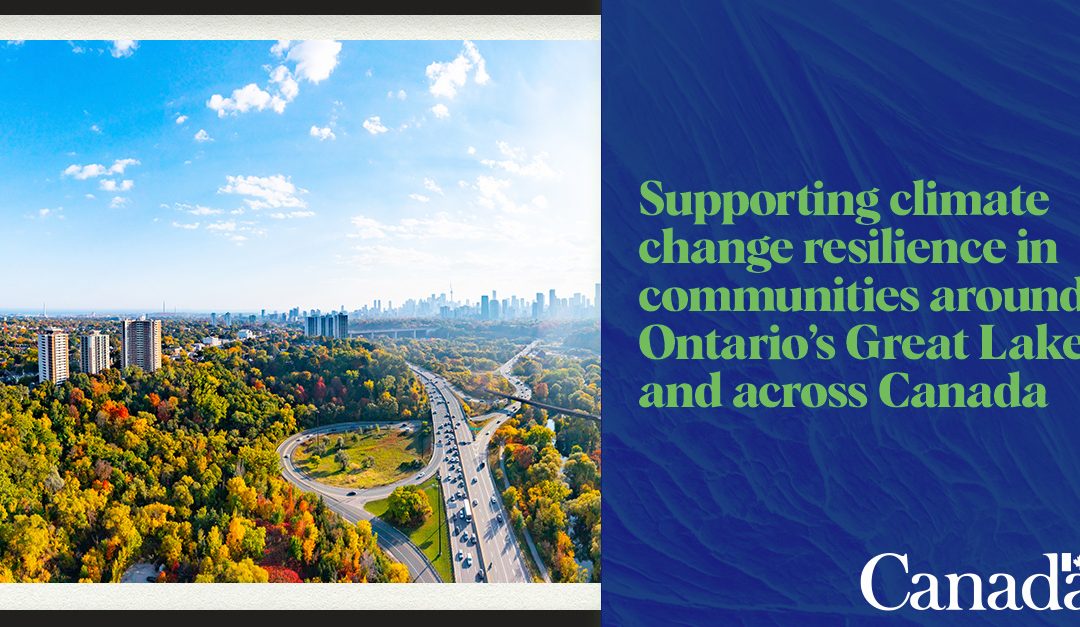
(Photo: ENRC)
Toronto, Ontario — January 20, 2025
The Government of Canada announced on January 20, 2025 a targeted investment of $4.1 million to support climate change adaptation planning for coastal communities along Ontario’s portion of the Great Lakes basin. The funding is part of the federal Climate‑Resilient Coastal Communities (CRCC) Program, aimed at equipping communities with the tools and strategies needed to address flooding, shoreline erosion, and other climate-related hazards. (canada.ca)
Funded Projects
The funding supports two key projects in the region:
-
Adaptation to Coastal Hazards Across the Great Lakes Region
-
Lead: Conservation Ontario
-
Funding: $3.1 million
-
Scope: Risk assessments and regional adaptation planning for Lake Superior, Lake Huron, and Lake Ontario shorelines. The project will involve local governments, Indigenous partners, businesses, and environmental experts to develop practical adaptation strategies. (canada.ca)
-
-
Pelee Coastal Climate Resilience and Adaptation Action Plan
-
Lead: Zuzek Inc.
-
Funding: $1.0 million
-
Scope: Focused on the Pelee Peninsula and Lake Erie, this project will assess flooding, erosion, and wetland loss risks, creating region-specific adaptation strategies for both communities and ecosystems. (canada.ca)
-
Federal Leadership
The announcement was made by Jonathan Wilkinson, Minister of Energy and Natural Resources, and Julie Dabrusin, Parliamentary Secretary to the Minister of Environment and Climate Change. Their statements emphasized the importance of early planning and collaboration with regional stakeholders.
“Investments in these initiatives allow governments, communities, and researchers to develop tools and resilience plans that address climate change impacts now and into the future,” said Steven Guilbeault, Minister of Environment and Climate Change Canada. (canada.ca)
Why This Matters
The Great Lakes basin is one of North America’s most important freshwater systems, supporting millions of residents and billions in economic activity. Rising water levels, shoreline erosion, and extreme weather events increasingly threaten communities and ecosystems along the lakes.
By funding these projects, the federal government aims to empower local authorities, Indigenous partners, and environmental organizations to make informed decisions about infrastructure, emergency preparedness, and long-term resilience planning. (canada.ca)