
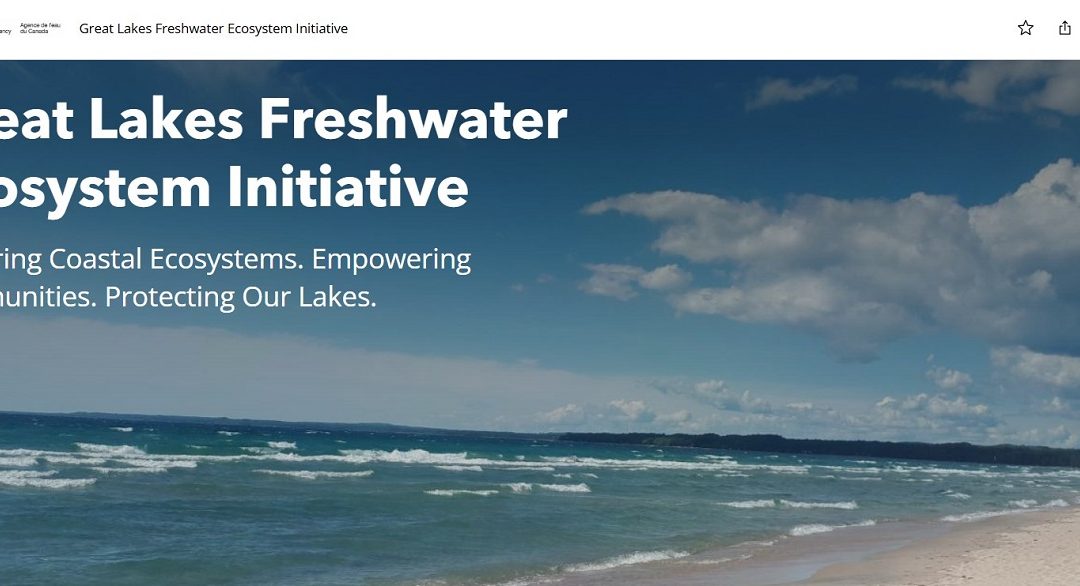
(Photo: Canada Water Agency)
TORONTO, Ontario — September 9, 2026 — The Canadian government has announced $6.6 million in funding for 31 Great Lakes restoration projects while launching public consultations for the country’s first National Water Security Strategy, placing renewed attention on the future of one of North America’s most important freshwater systems.
The announcement, made by the Canada Water Agency, is intended to address environmental pressures affecting water quality and ecosystem health throughout the Great Lakes basin. The funded projects will target problems including harmful algae, toxic chemicals, degraded habitats and pollution affecting waterways and surrounding communities.
The federal government says the Great Lakes basin in Ontario supports approximately 40 per cent of Canada’s economic activity and provides drinking water to one in four Canadians. The region also supports fisheries, manufacturing, agriculture, shipping, tourism and communities whose histories and livelihoods are closely connected to the lakes.
The new funding represents another investment in a freshwater system facing growing demands from urban development, industrial activity and environmental change. It also raises a broader question about whether restoration funding can keep pace with the scale of the problems affecting the lakes.
Thirty-One Projects Target Great Lakes Environmental Problems
The $6.6 million investment will support 31 partner-led projects through the federal Great Lakes Freshwater Ecosystem Initiative.
The program focuses on restoring water quality and ecosystem health in designated Areas of Concern, preventing toxic and nuisance algae, reducing releases of harmful chemicals and supporting greater Indigenous participation in freshwater governance and stewardship.
These priorities reflect the interconnected nature of Great Lakes environmental challenges. Pollution does not necessarily remain where it enters the water system, and damage to wetlands or waterways can affect wildlife, drinking water sources and communities far from the original source.
Harmful algal blooms, for example, can threaten drinking water supplies and recreational activities while imposing costs on municipalities and businesses. Wetland restoration can help improve habitat, support biodiversity and strengthen natural systems that filter water and reduce runoff.
Reducing harmful chemical releases is similarly important because some pollutants can persist in the environment and accumulate in wildlife, creating long-term challenges even after their original sources have been controlled.
The projects will be carried out by partner organizations working on specific environmental priorities across the basin. Their effectiveness will ultimately depend on whether they produce measurable improvements in water quality, habitat conditions and ecosystem health.
A New National Water Security Strategy
Alongside the funding announcement, the federal government opened public consultations to help develop Canada’s first National Water Security Strategy.
The consultation process invites Canadians to share their views on freshwater challenges and the policies needed to protect water resources. The online survey opened September 9 and is scheduled to remain available through October 25, 2026.
The strategy is intended to address water security at a national level, reflecting the importance of freshwater to communities, industries, ecosystems and Indigenous peoples.
For Great Lakes communities, the issue extends beyond having enough water available. Water security also means ensuring that supplies remain safe to drink, ecosystems remain healthy and infrastructure can withstand environmental pressures.
The Great Lakes contain a substantial share of the world’s surface freshwater, but their size does not make them immune to contamination or ecological damage. Pollution, invasive species, deteriorating infrastructure and changing environmental conditions can all threaten the long-term health of the basin.
The consultation provides an opportunity for residents, researchers, Indigenous governments, businesses and environmental organizations to influence how federal water policy develops.
Whether that process produces stronger protections will depend on the decisions made after the consultation closes and on the resources governments commit to carrying them out.
Indigenous Communities Have a Central Stake
The federal announcement also highlighted the importance of Indigenous participation in Great Lakes governance.
The government has dedicated nearly $6.5 million over four years, beginning in 2024–2025, to the Chiefs of Ontario and the Anishinabek Nation to support First Nations’ participation in governance, scientific work and stewardship of the lakes.
Indigenous communities have longstanding cultural, spiritual and economic relationships with the Great Lakes and their tributaries. Many First Nations depend on healthy waters for fishing, food systems, community well-being and the continuation of traditional practices.
Environmental decisions affecting the lakes can therefore have consequences that extend beyond conventional measures of pollution or economic damage.
Meaningful participation in freshwater governance allows Indigenous nations to contribute their knowledge, identify concerns affecting their territories and take part in decisions that may affect their rights and responsibilities.
Funding can help support that participation, but the broader question is whether governments will ensure Indigenous communities have meaningful influence over decisions, rather than simply being consulted after major policies have already been developed.
The long-term health of the Great Lakes depends on cooperation among governments, but cooperation must also account for the rights and interests of the Indigenous peoples whose relationships with these waters predate modern national borders.
The Economic Importance of Clean Water
The Great Lakes are not only an environmental resource. They are a foundation of the regional economy.
Manufacturers depend on water and transportation networks. Farmers rely on healthy watersheds. Commercial fishing and tourism businesses depend on functioning ecosystems, while municipalities require reliable sources of safe drinking water.
Environmental degradation can therefore create costs that spread through the economy. Contaminated water may require expensive treatment, damaged habitats can affect fisheries, and polluted shorelines can reduce the appeal of recreational areas that support local businesses.
Canada’s federal government has committed $420 million over 10 years, beginning in 2023, through the Great Lakes Freshwater Ecosystem Initiative to accelerate restoration and protection efforts. The new $6.6 million investment is part of that wider program.
The scale of the commitment reflects the importance of the basin, but it also highlights the continuing need for sustained action. Restoration projects can make meaningful progress at particular sites, yet pollution sources and habitat pressures may extend across jurisdictions and require long-term coordination.
The Great Lakes are shared by Canada and the United States, making cross-border cooperation essential. Water pollution, invasive species and ecological changes do not stop at the international boundary, and progress on one side of the border can be undermined if major problems remain unresolved on the other.
Funding Is Only the Beginning
The new investment offers resources for organizations working to improve Great Lakes water quality, but the ultimate measure of success will be what changes on the ground.
Residents need to know whether pollution levels decline, wetlands recover, harmful algae become less frequent and ecosystems become more resilient. Communities also need clear information about how public funding is spent and whether projects achieve the outcomes they promise.
The National Water Security Strategy consultation presents another opportunity to shape Canada’s approach to freshwater protection. Its importance will depend on whether public input leads to concrete measures, transparent targets and sustained investment.
The Great Lakes have supported communities and industries for generations, but their continued importance should not be mistaken for an assurance that their health is guaranteed.
Protecting the basin requires governments to address existing pollution while preventing new sources of damage. It requires scientific monitoring, effective enforcement, community participation and cooperation across political boundaries.
The $6.6 million announced in Toronto is one part of that effort. The challenge is ensuring that the projects deliver lasting improvements rather than temporary gains.
For millions of people who depend on the Great Lakes, clean water is not simply an environmental objective. It is a requirement for public health, economic stability and the future of the communities that surround the lakes.
The funding announcement marks another step toward protecting that resource. Whether it becomes a lasting turning point will depend on what governments and project partners do next.