
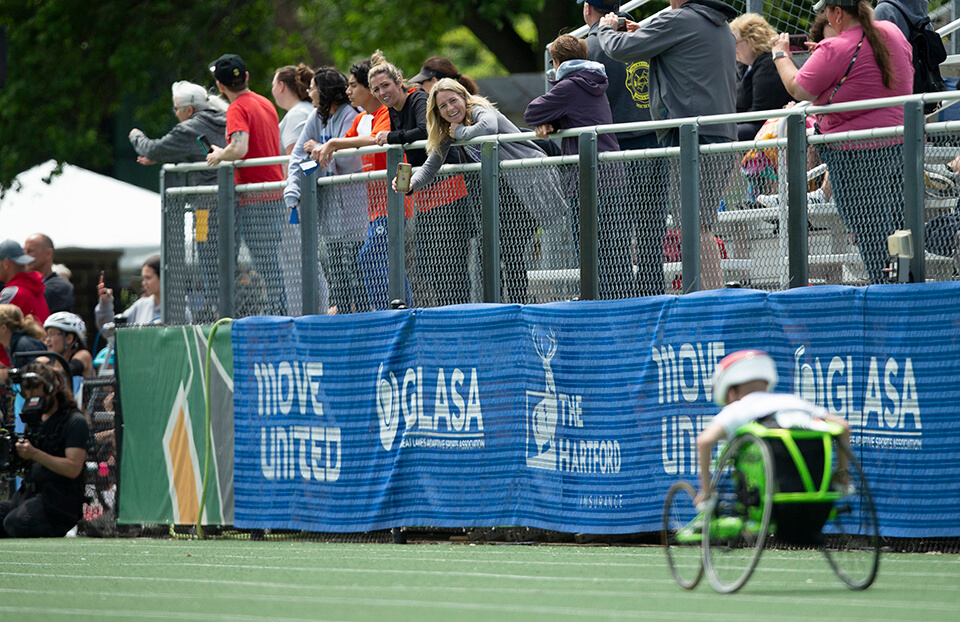
(Photo: GLASA)
Lake Forest, IL — June 17, 2025
Athletes from across the Great Lakes region gathered in northeastern Illinois last week for the 2025 GLASA Great Lakes Games, a multi-day adaptive sports competition that highlighted elite performance, inclusivity, and pathways to national-level competition.
The Games, hosted by the Great Lakes Adaptive Sports Association (GLASA) in partnership with The Hartford, ran from June 11 through June 16, 2025, with events and classification sessions held at multiple venues in and around Lake Forest, Illinois, where GLASA is headquartered.
Designed for athletes with physical, visual, and intellectual disabilities, the Great Lakes Games serve as both a competitive championship and a developmental stepping stone toward national and international adaptive sport opportunities.
A Broad Field of Adaptive Competition
This year’s Games featured competition across a wide range of Paralympic-aligned and adaptive disciplines, including:
-
Track and field
-
Swimming
-
Para pickleball
-
Boccia
-
Archery
-
Shooting
-
Para powerlifting
-
Paratriathlon
Athletes competed at varying levels — from first-time competitors to seasoned veterans — with many participants undergoing official classification evaluations, a required step for eligibility in higher-level national and international events.
According to GLASA, the Great Lakes Games are intentionally structured to provide a continuum of competition, allowing athletes to develop skills, gain experience, and measure progress against peers from across the region.
Pathway to National Competition
Beyond medals and placements, the event plays a critical role in the adaptive sports pipeline. Performances and classifications completed during the Games may count toward qualification for future events, including Move United Nationals in Partnership With The Hartford and other sanctioned adaptive championships.
GLASA officials emphasized that the Games are not solely about podium finishes, but about building access, confidence, and long-term athletic opportunity.
“Events like the Great Lakes Games are essential for growing adaptive sport,” organizers noted in event materials. “They give athletes a place to compete seriously while also learning, connecting, and preparing for what comes next.”
Community Impact and Regional Reach
The 2025 Games drew athletes from multiple Great Lakes states, reinforcing the event’s role as a regional hub for adaptive sport. Volunteers, coaches, classifiers, and medical staff supported athletes throughout the week, while educational clinics and outreach programming ran alongside competition.
For Lake Forest and surrounding communities, the Games brought visibility to adaptive athletics and underscored the growing presence of inclusive sports programming across the Midwest.
Looking Ahead
With the 2025 Games concluded, GLASA officials say planning is already underway for future editions, with continued emphasis on expanding access, increasing sport offerings, and strengthening partnerships throughout the Great Lakes region.
As adaptive sports continue to gain recognition nationwide, the GLASA Great Lakes Games remain a cornerstone event — one that blends competition, opportunity, and community in equal measure.