
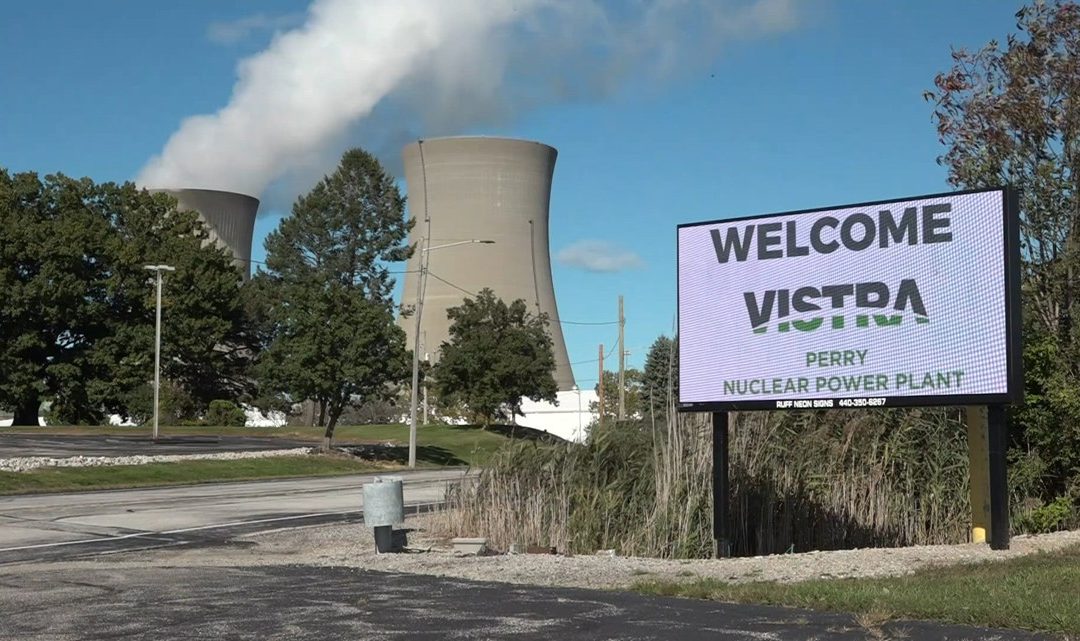
(Photo: WKYC)
CLEVELAND, Ohio — October 6, 2026 — A federal loan commitment worth up to $4.2 billion is putting Ohio and Pennsylvania at the center of a major nuclear-energy investment, with plans to modernize three existing power plants, increase electricity generation and support thousands of jobs. Announced by the U.S. Department of Energy on October 5, the financing would help expand output at nuclear facilities near Lake Erie and the Ohio River as electricity demand grows across the region.
The proposed investment targets the Beaver Valley Nuclear Power Station in Pennsylvania and the Davis-Besse and Perry nuclear power plants in Ohio. Rather than funding three entirely new reactors, the plan would upgrade existing facilities and increase the amount of electricity they can produce. The Energy Department estimates that the projects could add 433 megawatts of nuclear generating capacity while preserving nearly 4 gigawatts of existing generation.
For the Great Lakes region, the announcement raises important questions about the future of electricity costs, industrial development, employment and environmental protection. Reliable power is essential to manufacturers, hospitals, households and the expanding data-center industry. At the same time, communities near nuclear plants have a continuing interest in safety oversight, water protection and the long-term management of nuclear waste.
The proposed financing is a conditional loan commitment, not $4.2 billion already spent. The plant operator, Vistra, must satisfy technical, legal, environmental and financial requirements before the federal government finalizes the financing and releases the funds. The projected benefits, including additional generating capacity and employment, will depend on the projects moving forward as planned.
Ohio and Pennsylvania Take Center Stage in Nuclear Investment
The Department of Energy announced the conditional loan commitment on October 5, 2026, as part of a broader effort to expand domestic nuclear generation and strengthen electricity supplies.
The three principal facilities are established nuclear power stations that already contribute to the regional electricity system.
Davis-Besse is located near Oak Harbor in northwestern Ohio, while the Perry Nuclear Power Plant sits east of Cleveland in Lake County. Both are situated along Lake Erie, placing their operations close to communities where water quality, industrial activity and reliable electricity are major regional concerns.
Beaver Valley is located near Shippingport in western Pennsylvania, close to the Ohio River.
Together, the plants form part of a wider electricity network serving customers across multiple states. The facilities participate in a regional power system in which electricity generation and demand are balanced across state boundaries.
The proposed upgrades are intended to increase the output of these existing plants without requiring new transmission corridors or equivalent amounts of additional generating infrastructure, according to the Energy Department.
The agency estimates that the projects will support approximately 3,000 project-related jobs in engineering, construction and planned maintenance outages, while helping preserve thousands of permanent jobs associated with the facilities.
Those figures are federal projections, not guarantees of new permanent employment. Some positions would likely be temporary and tied to specific construction, engineering or maintenance activities.
What the $4.2 Billion Loan Would Finance
The proposed financing would support modernization and power uprates at Vistra’s nuclear facilities.
A power uprate is an increase in the amount of electricity a nuclear reactor is authorized and equipped to produce. Depending on the project, achieving that increase may require improvements to turbines, electrical systems, instrumentation and other equipment, along with technical analysis and regulatory review.
The objective is to generate more electricity from existing infrastructure rather than build entirely new nuclear power stations.
The Energy Department says the three plants could add 433 megawatts of generating capacity through the planned improvements. It also estimates that the projects would preserve nearly 4 gigawatts of existing nuclear generation.
The department says the investment would support the plants’ operation for an additional 20 years beyond their existing licenses. That is a stated goal of the proposed investment, not confirmation that the Nuclear Regulatory Commission has already approved additional operating time.
The financing package also includes an option for potential future uprates at Vistra’s Comanche Peak Nuclear Power Plant in Texas. That option is separate from the principal Ohio and Pennsylvania projects.
Before the loan can be finalized, Vistra must satisfy the federal government’s technical, legal, environmental and financial conditions. The announcement therefore marks a significant proposed financing commitment, but the final agreements and implementation details remain important next steps.
Why the Investment Matters for Lake Erie Communities
The proposed improvements at Davis-Besse and Perry are particularly relevant to northern Ohio and the Lake Erie shoreline.
Nuclear power plants can provide substantial economic benefits to their surrounding communities through direct employment, contractor spending, equipment purchases and demand for specialized services.
Major upgrades can create work for electricians, engineers, construction crews, maintenance specialists and industrial suppliers. Local restaurants, hotels and other businesses may also benefit when large numbers of workers travel to a project site.
For communities near Davis-Besse and Perry, the investment could provide additional business opportunities if construction and maintenance contracts proceed as anticipated.
However, the economic effects will depend on how the work is scheduled, how many workers are hired, where contractors are based and how much of the spending remains in the surrounding region.
The projected 3,000 project-related jobs should not be interpreted as 3,000 new permanent positions. Some employment will be associated with temporary construction and planned outages, while existing plant jobs may be preserved rather than newly created.
Even with that distinction, the proposed investment illustrates the connection between energy infrastructure and the economies of Great Lakes communities.
Could More Nuclear Power Help Lower Electricity Bills?
The federal government says the investment is intended to strengthen the grid, improve reliability and help lower energy costs as demand grows.
Electricity demand is increasing across parts of the United States as data centers, manufacturing facilities and other large consumers seek additional power. Households also depend on reliable electricity for heating, cooling, appliances and transportation as more activities become electrified.
Nuclear plants can contribute to that demand because they generally provide continuous electricity generation rather than relying directly on changing weather conditions.
Increasing output at existing plants could help supply additional electricity without requiring an equivalent amount of new generating infrastructure. In some circumstances, additional supply can ease pressure on electricity markets.
But the effect on household bills is not guaranteed.
Electricity prices depend on numerous factors, including generation costs, fuel prices, transmission infrastructure, utility contracts, market conditions and state regulatory decisions. Even if the proposed upgrades increase available electricity, the extent to which consumers benefit financially will depend on how those changes affect the wider power system.
The loan announcement does not establish a specific reduction in residential electricity rates or guarantee savings for customers in Ohio or Pennsylvania.
For consumers, the meaningful test will be whether the completed projects deliver additional dependable electricity at a cost that contributes to a more affordable power supply.
Nuclear Energy and the Great Lakes Environment
Nuclear power also presents important environmental considerations for a region whose communities and economies depend on freshwater.
During operation, nuclear reactors produce electricity with very low direct greenhouse gas emissions compared with conventional coal- and natural-gas-fired power plants. Maintaining existing nuclear generation can therefore help limit emissions when nuclear output displaces electricity that would otherwise be produced by fossil fuels.
Increasing output from existing reactors could contribute to that benefit, depending on the generation resources used elsewhere on the grid.
However, nuclear facilities must also manage radioactive materials, spent nuclear fuel and other operational wastes under strict regulatory requirements.
Cooling systems and water use are additional considerations for plants located near major waterways. The environmental effects depend on the specific cooling arrangements, operating conditions and protections in place to limit impacts on aquatic ecosystems.
For Davis-Besse and Perry, Lake Erie is a particularly important regional resource. The lake supports drinking-water supplies, commercial activity, recreation and tourism for communities in both the United States and Canada.
Any plant upgrades must continue to comply with applicable nuclear safety and environmental requirements. The federal loan announcement itself does not establish that those requirements have been relaxed or that every proposed modification has already received regulatory approval.
The challenge for the region is to maintain a reliable electricity supply while protecting the freshwater resources that underpin public health and local economies.
What the Investment Could Mean for Workers
The planned modernization projects could generate demand for specialized labor across Ohio and Pennsylvania.
Nuclear plant upgrades require technical expertise, engineering services, equipment installation and maintenance work. These activities can create opportunities for workers with experience in electrical systems, industrial construction, mechanical engineering and power generation.
The Energy Department estimates that the projects will support approximately 3,000 jobs connected to engineering, construction and planned outages.
The investment is also intended to help preserve thousands of permanent jobs associated with the existing facilities.
The distinction between these two categories is important. A project can generate substantial temporary employment without producing an equivalent increase in long-term staffing.
The eventual regional benefits will depend on how many positions are filled by local workers, how many contracts go to businesses in the Great Lakes region and how much work is required at each plant.
If the projects proceed, local workforce-development programs and technical training institutions could have opportunities to prepare workers for specialized energy-sector positions.
However, the announcement does not provide a complete breakdown of projected employment by state, facility, occupation or duration.
What the Conditional Loan Means for Taxpayers
The $4.2 billion figure represents a conditional federal loan commitment rather than a grant or a completed expenditure.
Under a loan arrangement, the borrower is generally required to repay the funds according to the terms of the final agreement. That differs from a grant, which generally does not require repayment.
The federal government’s eventual financial exposure will depend on the finalized terms, the borrower’s obligations and the performance of the projects.
Vistra must satisfy the conditions attached to the commitment before definitive financing documents are completed and funds are disbursed.
The announcement does not establish that the full amount will ultimately be drawn, nor does it provide enough information to conclude that the investment will necessarily result in lower electricity bills.
For taxpayers and communities, the next steps will be important. Final financing terms, project schedules, regulatory approvals and evidence of completed upgrades will help determine how the commitment translates into practical results.
A Wider Strategy for Meeting Regional Electricity Demand
The proposed nuclear investment is part of a larger debate over how the United States will supply electricity as industrial activity and digital infrastructure expand.
Nuclear power is one component of that challenge. Other resources, including wind, solar, natural gas, hydropower, energy storage and improvements to transmission infrastructure, also contribute to electricity supply and reliability.
Existing nuclear plants have a particular role because they can provide large amounts of electricity from established facilities. Modernization and uprates may allow them to contribute more power without requiring entirely new generating stations.
For the Great Lakes region, this is especially significant because manufacturing, transportation, water infrastructure and major population centers all depend on reliable electricity.
Ohio’s two plants near Lake Erie place the state at the center of the proposed modernization effort. Pennsylvania’s Beaver Valley facility adds another major nuclear site to the investment.
Whether the projects deliver their projected benefits will depend on their execution, regulatory compliance, financing and eventual performance.
A Major Energy Commitment, With Results Still to Come
The federal government’s conditional loan commitment of up to $4.2 billion puts three existing nuclear power plants in Ohio and Pennsylvania at the center of a major proposed investment in regional electricity infrastructure.
If completed as envisioned, the projects could add 433 megawatts of nuclear capacity, help preserve nearly 4 gigawatts of existing generation and support thousands of project-related jobs, according to the Energy Department.
For Great Lakes communities, the implications extend beyond the nuclear industry. The investment could affect regional electricity supply, industrial development, employment and the long-term operation of facilities near important waterways.
But the projected outcomes are not yet guaranteed. The financing remains conditional, the planned upgrades must proceed through the relevant technical and regulatory processes, and the effects on electricity prices will depend on broader market conditions.
For residents of Ohio and Pennsylvania, the most important questions will be whether the projects deliver the promised capacity, sustain regional employment, comply with safety and environmental requirements and contribute to a dependable electricity supply.
The announcement marks a significant step in the effort to modernize existing nuclear infrastructure. The real measure of its success will come later, when the financing is finalized, the work is completed and the results become clear for the communities and electricity customers the investment is intended to serve.