
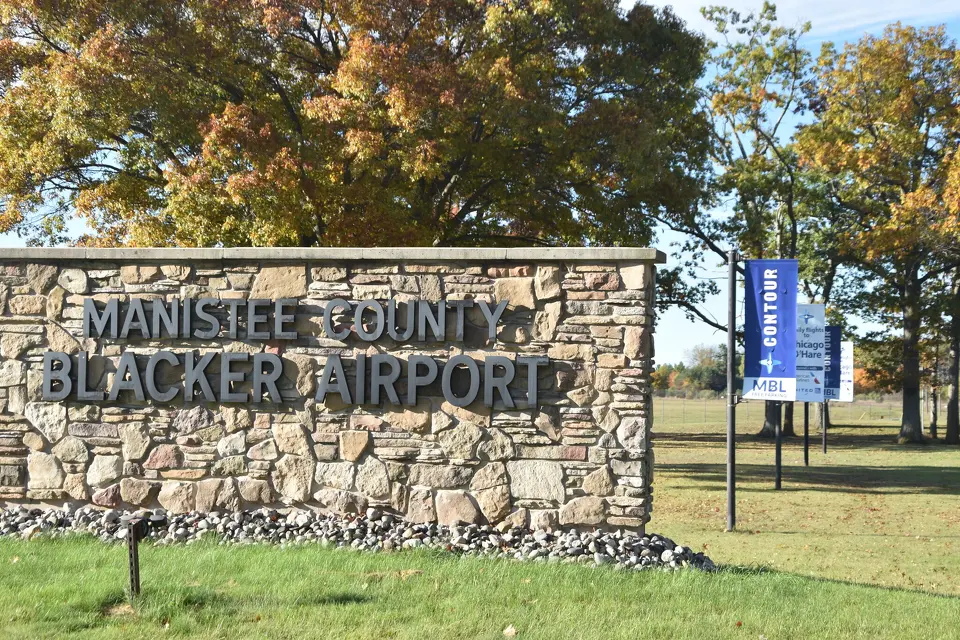
(Photo: Manistee Airport)
Manistee, MI — January 28, 2026 — Manistee County Blacker Airport has been awarded a $150,000 PFAS response grant from the Michigan Department of Environment, Great Lakes, and Energy (EGLE) as part of a $9 million statewide initiative to address PFAS contamination at municipal airports across Michigan.
Per- and polyfluoroalkyl substances (PFAS) are a group of long-lasting synthetic chemicals often found in firefighting foams and industrial products that don’t break down easily in the environment and have been linked to potential health and ecological concerns when they enter soil and water. Airports, where firefighting foam has historically been used for training and emergency response, are a key focus of mitigation efforts.
At Blacker Airport, the funding will be used to remove PFAS-contaminated aqueous film forming foam (AFFF) from the airport’s aircraft rescue and firefighting vehicle and to rinse PFAS residues from foam tanks before the equipment is outfitted for safer fluorine-free foam (F3) alternatives, according to Airport Director Miles Weaver.
Blacker Airport previously received a smaller PFAS-related grant in 2019 that helped purchase equipment enabling foam testing without releasing it into the environment — a step toward reducing chemical discharge during routine maintenance and training.
The $9 million in total PFAS response grants will support 19 municipal airports statewide, assisting with PFAS testing and monitoring, groundwater and stormwater cleanup, source control strategies, and firefighting equipment decontamination or gear replacement to prevent future releases.
Why it matters to the Great Lakes region
This initiative comes at a time of heightened awareness and concern about PFAS contamination across the Great Lakes region — one of the world’s largest freshwater ecosystems, supporting drinking water, agriculture, fisheries, and tourism for millions of people on both sides of the U.S.–Canada border. Efforts like these aim to protect water quality, human health, and local environments from persistent pollutants that can travel through groundwater and surface water systems.