
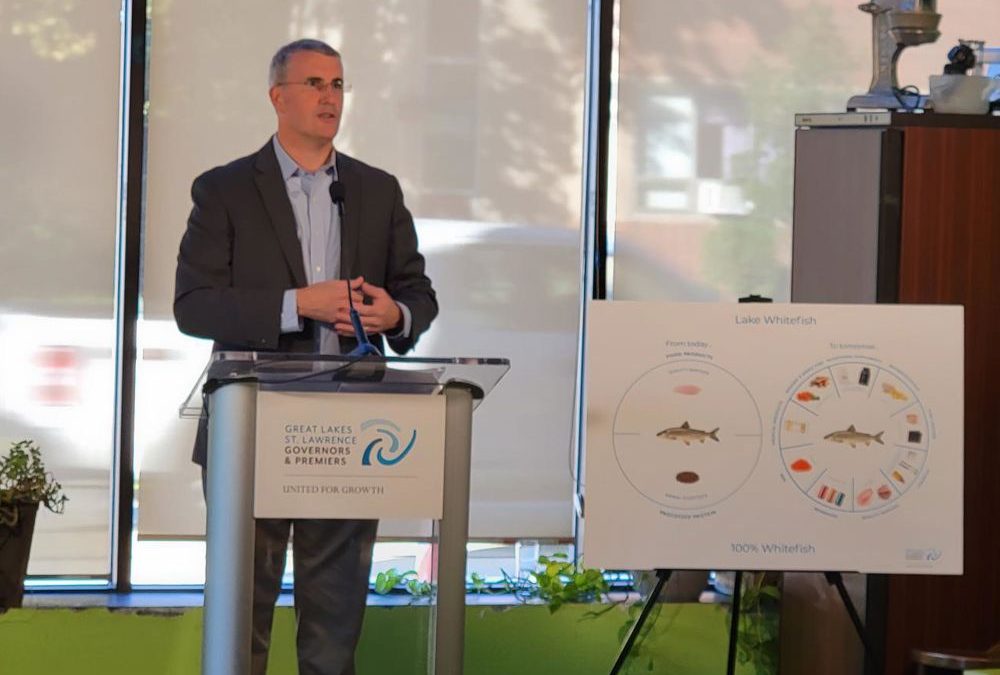
(Photo: Great Lakes St. Lawrence Governors & Premiers)
January 2026 — A major shift is underway in the Great Lakes region’s seafood industry as commercial fish processors, aquaculture producers, and related companies move to eliminate the landfill disposal of fish byproducts and embrace full utilization of all parts of the fish they harvest or raise.
Under the 100% Great Lakes Fish Pledge, an initiative launched by the Great Lakes St. Lawrence Governors and Premiers (GSGP), dozens of companies have committed to using every part of each fish — including traditionally discarded heads, guts, skin, and scales — to create new products and reduce waste across the supply chain.
Industry Moves Toward Zero Waste
To date, 44 companies representing nearly 90% of the region’s commercial catch by volume have signed the pledge, collectively handling more than 30 million pounds of fish annually. These signatories span processing houses, fishers, and aquaculture firms in both the United States and Canada.
“This milestone reflects the leadership of companies across the Great Lakes seafood value chain — commercial fishers, aquaculture producers, and processors — who are proving that full fish utilization is practical,” said David Naftzger, Executive Director of the Great Lakes St. Lawrence Governors and Premiers. According to GSGP, the approach not only reduces waste but also opens new markets for fish-based products.
The pledge’s core concept is simple: rather than landfilling or relegating byproducts to low-value uses such as animal feed, the region’s fish industry will channel these materials into higher-value applications including fish leather, fish meal, fish oil, collagen, fertilizer, and other emerging products.
New Markets and Economic Opportunities
Proponents say the transition toward full utilization strengthens regional economies and rural jobs while enhancing sustainability. “By committing publicly to full utilization, we’re strengthening our businesses and keeping working waterfronts viable across the region,” said Charlie Henriksen, owner of Henriksen Fisheries and an advocate for Wisconsin’s commercial fishing community.
In addition to environmental benefits, the pledge is designed to help seafood companies capture more value per fish, support supply-chain innovation, and create incentives for sustainable harvesting. Analysts say that finding profitable uses for byproducts already present in large quantities could expand revenue streams for processors and smaller businesses alike.
Growing Participation
The initiative continues to expand. Recent additions to the 100% Great Lakes Fish Pledge include:
-
Freshwater Fish Marketing Corporation, which processes approximately one million kilograms of fish annually from Lake Superior and will promote byproduct use among partners.
-
Steelhead Food Company, a fish processor based in Ontario and the U.S. side of the region, emphasizing high-value uses for byproducts like marine collagen and protein.
-
Huron Tackle, a Traverse City, Michigan-based firm that handles waste from sport fish cleaning stations and channels it toward compost, pet food, and similar new products.
-
A range of other processors and fish farms that are increasingly joining the pledge and exploring innovative applications for traditionally wasted parts of the fish.
International Recognition
The initiative’s progress has also drawn global attention. In 2025, the 100% Great Lakes Fish Initiative was recognized with an award from the United Nations Food and Agriculture Organization (FAO) for its contribution to sustainable aquatic food systems — often referred to internationally as the “blue economy.” This recognition highlights the region’s role as a leader in reducing food waste and creating circular economic models for seafood production.
What’s Next
In 2026, the GSGP plans to continue recruiting companies to join the pledge and work toward full participation. Efforts will also focus on incorporating fish cleaning stations and smaller processors into the regional system, creating more opportunities for material recovery and innovative product development.
The Great Lakes fish utilization pledge represents a significant shift toward reducing the environmental footprint of commercial fisheries while building economic opportunities rooted in sustainability — a development that could serve as a model for other regional fisheries around the world.